How Much Does Mold Remediation Cost in Raleigh, NC? (2026 Pricing Guide)
Key Takeaways
- Most Raleigh homes land between $1,400 and $6,200. Small contained jobs run $500–$1,500; a full crawl space with encapsulation can reach $7,500–$15,000 or more.
- Industry pricing runs $10–$25 per square foot — but square footage is only one of seven variables that move your final number.
- Crawl spaces drive a disproportionate share of Triangle mold spending: red clay soil, 46+ inches of annual rain, and a housing stock built largely before the 2004 closed-crawl-space code.
- Homeowners insurance covers mold only when it follows a sudden, accidental water event — and even then most policies cap mold work at $1,000–$10,000.
- North Carolina does not license mold remediators. Certification, a written scope, and source removal are your only real quality filters.
The short answer: what Raleigh homeowners actually pay
Most residential mold remediation in the Raleigh area falls between $1,400 and $6,200 — a contaminated bathroom wall, a section of crawl space, mold behind a kitchen cabinet after a slow supply-line leak. A small, contained patch under about 10 square feet typically runs $500 to $1,500. A whole crawl space with encapsulation and a dedicated dehumidifier can reach $7,500 to $15,000 or more. Nationally the ranges are similar, with averages clustering between $2,300 and $3,500; Raleigh carries no regional premium.
The most-cited benchmark is $10 to $25 per square foot of contaminated area. Treat it as a sanity check, not a formula. Twenty square feet of surface growth on a painted basement wall and twenty square feet inside a wall cavity with saturated insulation are not the same job.
Cost by size of the affected area
| Affected area | Typical cost |
|---|---|
| Under 10 sq ft (isolated patch) | $500 – $1,500 |
| About 50 sq ft | $500 – $1,500 |
| About 100 sq ft | $1,000 – $3,000 |
| About 200 sq ft | $2,000 – $6,000 |
| About 500 sq ft | $5,000 – $15,000 |
| 1,000 sq ft / whole home | $10,000 – $30,000 |
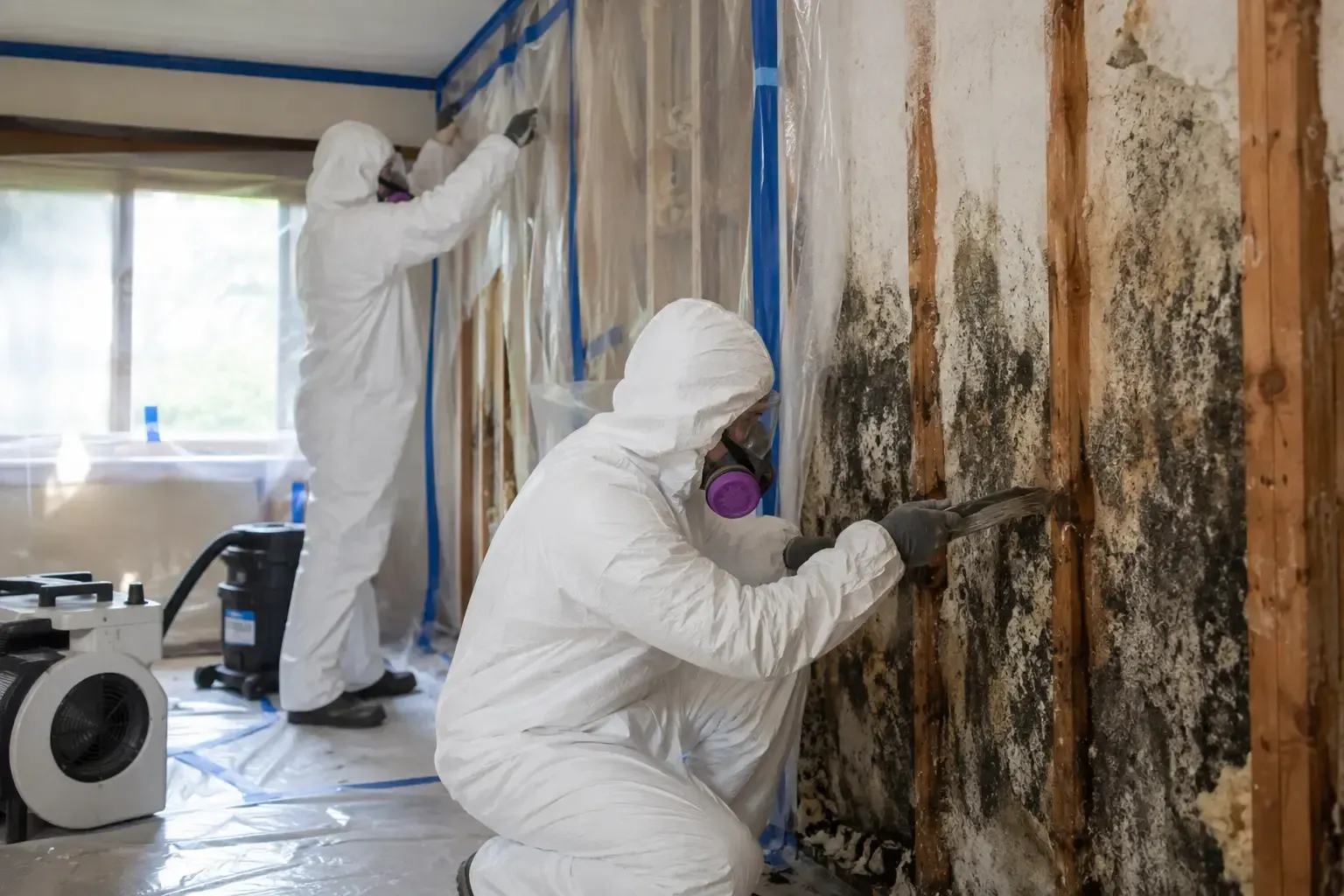
Past roughly 100 square feet, projects generally require full containment — sealed barriers, an airlock entry, negative air pressure, daily monitoring — which alone accounts for an estimated 15–25% of total cost. That is why the step up from 100 to 200 square feet is steeper than the arithmetic suggests.
Cost by where the mold is
| Location | Typical range |
|---|---|
| Bathroom (small, isolated) | $500 – $1,500 |
| Crawl space | $1,500 – $5,500 |
| Basement | $1,500 – $6,000 |
| Attic | $1,000 – $9,000 |
| Inside walls / drywall | $1,000 – $12,000+ |
| HVAC ductwork (active mold) | $600 – $2,000 |
| Full HVAC system | $3,000 – $10,000 |
| Whole house | $10,000 – $30,000 |
Location matters more than most homeowners expect, and it is mostly about access. A crew working upright in a finished basement moves quickly. The same crew on their backs in a 24-inch crawl space does not.
Why crawl spaces drive so much of Raleigh’s mold spending
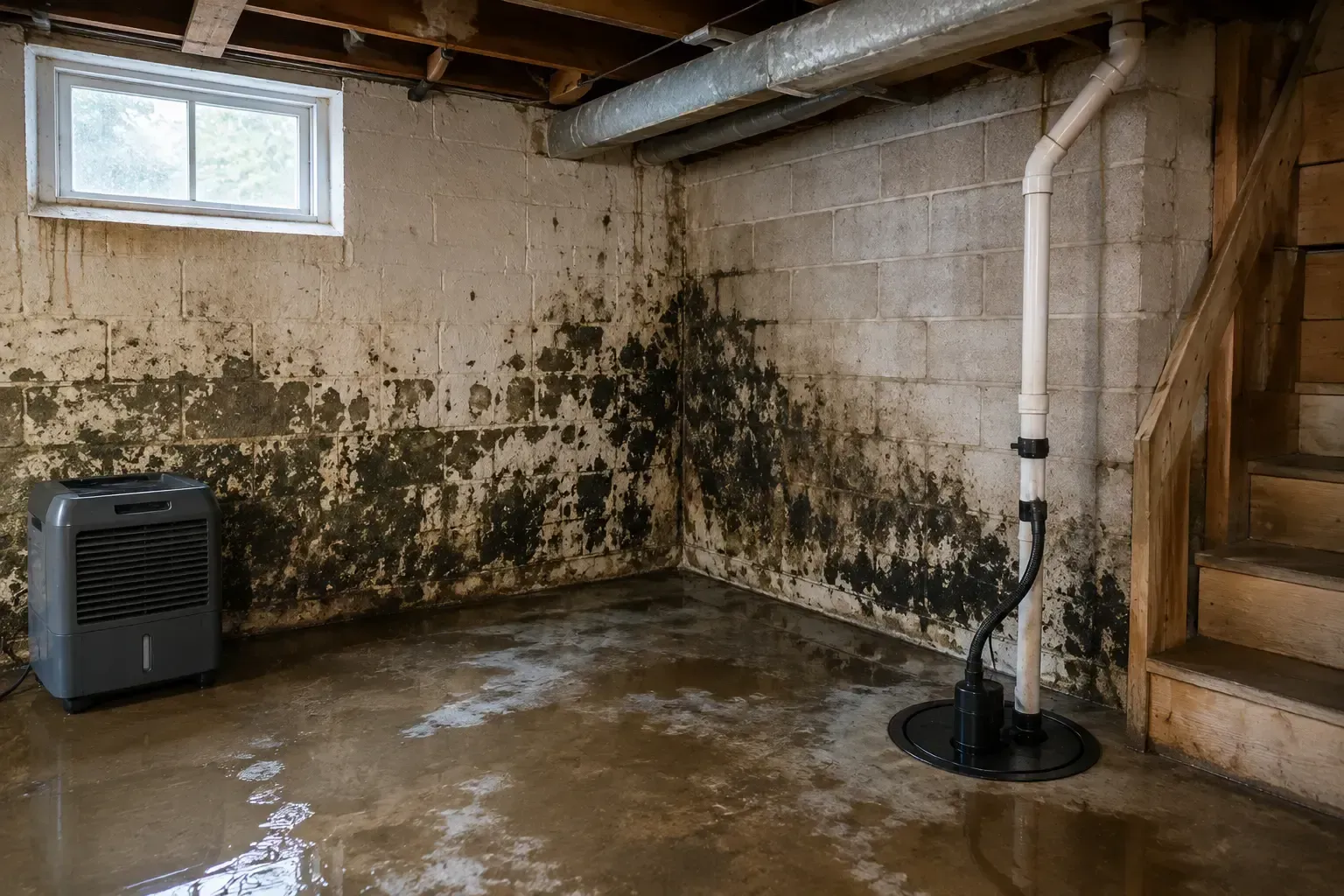
If you own a home in Raleigh, Cary, Apex, or Wake Forest, the crawl space is the most likely place a mold problem starts — and the most expensive to fix. Four factors stack up.
- Rainfall. The Triangle averages roughly 46 inches a year against a U.S. average near 38.
- Humidity. Summer mornings routinely hit 85–89% relative humidity, and dew points stay above 65°F from April through October.
- Soil. Piedmont red clay drains slowly and releases ground moisture upward into the crawl space continuously.
- Housing stock. North Carolina adopted closed-crawl-space code in 2004; Raleigh’s median home predates it, so most local crawl spaces were built vented and never upgraded.
The mechanism is straightforward physics. Warm, humid outdoor air enters the foundation vents in summer, meets framing 10–15 degrees cooler, and condenses. Research by Advanced Energy — a Raleigh-based nonprofit — found vented crawl spaces in the Southeast exceeding 80% relative humidity through much of spring and summer, while sealed ones stayed below 65%. Sustained moisture above roughly 60% establishes mold on wood framing within weeks.
And it does not stay down there. A Duke University study of 238 North Carolina homes found the HVAC system transmitted viable mold spores from the crawl space into the living area in 19% of them.
The seven variables that actually move your price
- Square footage of contamination. The largest determinant, and the basis of per-square-foot pricing.
- Access and location. Confined-space work in crawl spaces and low-pitch attics carries a labor premium.
- Containment requirements. Barriers, airlocks, and negative air machines past roughly 100 square feet.
- Porous versus non-porous materials. Tile, glass, and metal can be HEPA-vacuumed and wiped. Drywall, insulation, carpet, and OSB decking must be removed and disposed of.
- Species. Stachybotrys and Chaetomium trigger stricter protocols and PPE, commonly adding 15–25%.
- Whether reconstruction is included. See below — this is the big one.
- Testing. Assessment and clearance are separate line items.
Labor is roughly 60% of a typical mold remediation invoice. That ratio is why access difficulty — a pure labor multiplier — swings prices so hard.
Remediation versus reconstruction: the line that surprises people
Remediation means removing the mold and contaminated material, drying the structure, and returning the space to a normal fungal condition. Reconstruction means putting the house back — new drywall, insulation, paint, flooring, trim.
Many quotes cover only the first. If a crew cuts out four feet of drywall around a leak, remediation ends at a clean, open stud bay. Rebuilding that wall is a separate line item that can add $1,000 to $20,000. Ask one direct question: does this number leave my house finished, or open?
What testing costs, before and after
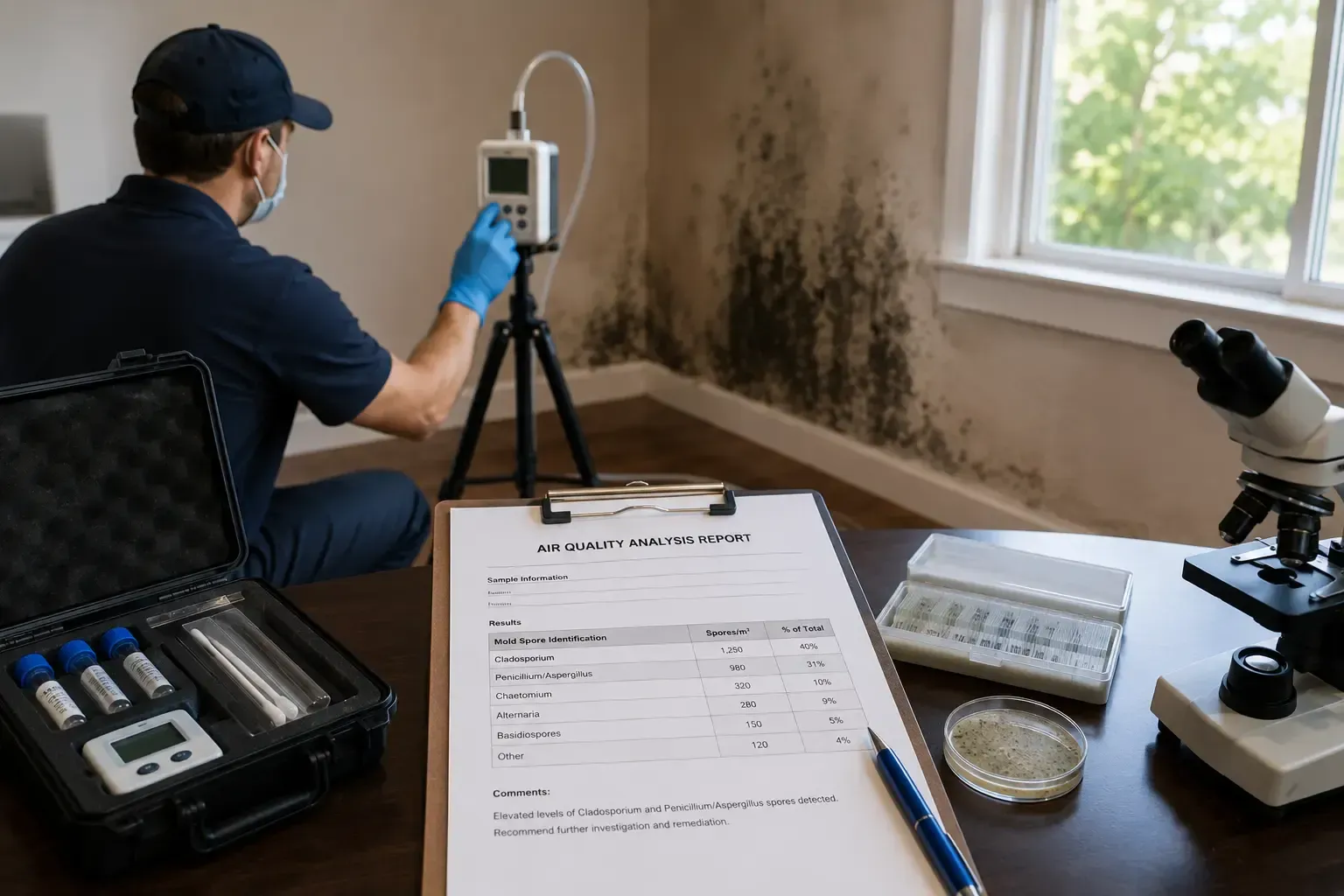
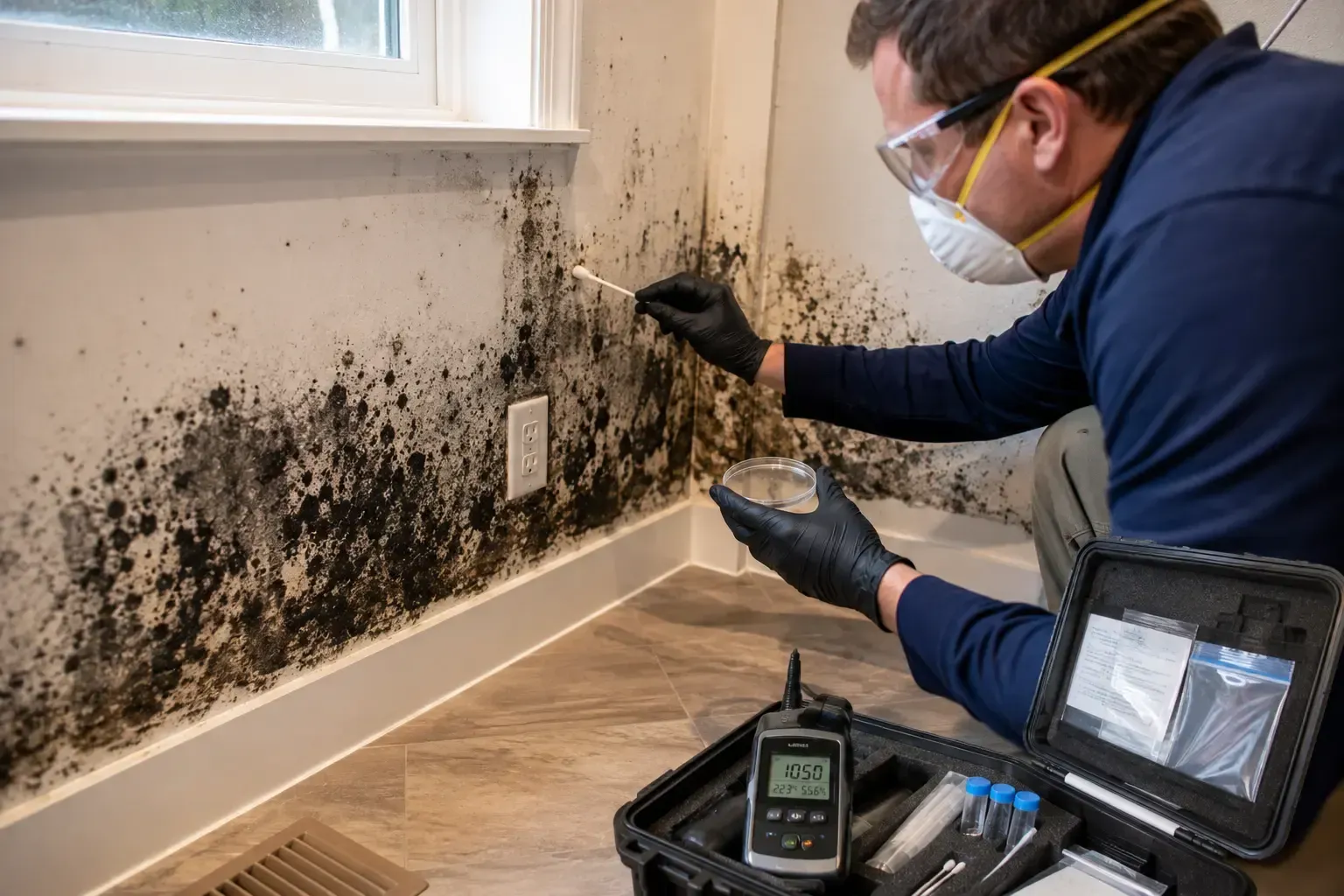
A visual inspection without sampling runs about $300–$600. Add lab sampling and you are typically at $450–$800, with individual samples running $25–$75 each. Post-remediation verification — the clearance test confirming the work succeeded — is a separate $200–$500, and most insurers require it on a covered claim. Without one you have no documentation that the problem was actually resolved.
Will homeowners insurance cover it?
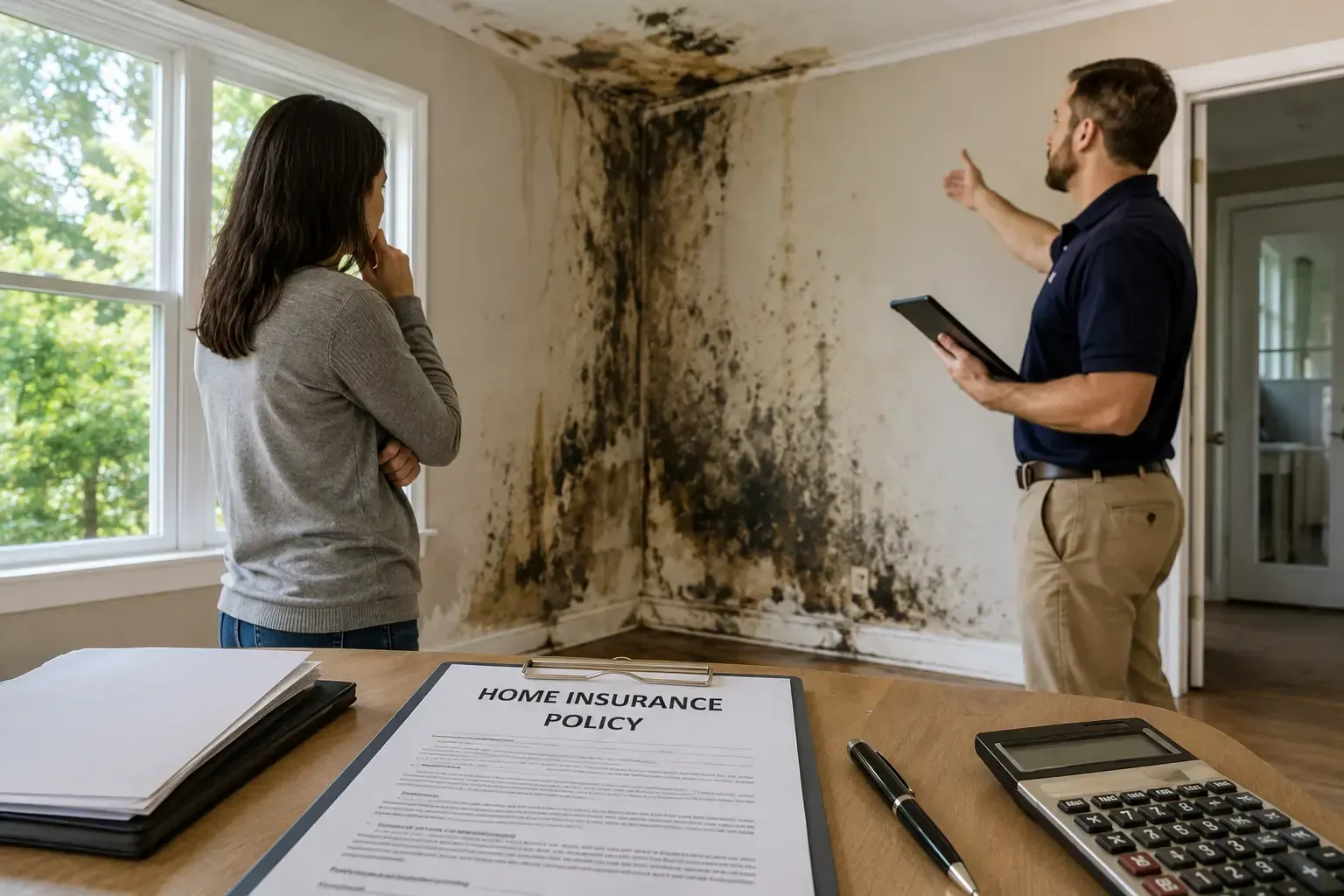
Sometimes — and the rule is narrower than most policyholders expect. Mold itself is never the covered peril. What gets covered is the water event that caused it, and only if that event was sudden and accidental. A burst supply line, a failed water heater, an overflowing appliance, or wind-driven rain through storm damage generally qualifies.
Even on an approved claim, most standard HO-3 policies apply a separate sublimit for “fungus, wet or dry rot, and bacteria” — commonly $1,000 to $10,000 regardless of your dwelling coverage. Endorsements can raise it, but you have to buy them before you need them.
Commonly denied:
- A slow leak behind a wall that ran for weeks or months — maintenance, not accident
- Chronic humidity and condensation
- Flooding, unless you carry a separate flood policy
- Sewer or drain backup, unless you bought the rider
- A known problem left unaddressed
- Claims reported more than 30 days after discovery
That last one matters in a hurricane-exposed state: report promptly and photograph everything before anyone touches it.
North Carolina does not license mold remediators
Worth stating plainly: there is no North Carolina mold remediation license. NC State University’s Cooperative Extension confirms no federal or state certification program exists for companies providing mold remediation services. Only Florida, Texas, New York, and Washington, D.C. license both mold assessors and remediators.
So be skeptical of any contractor claiming to hold a “North Carolina mold license,” and equally skeptical of sites citing a state statute as a mold licensing law. At least one vendor site cites N.C.G.S. § 130A-440 for this purpose; that chapter governs health assessments for children entering public school and has nothing to do with mold. What a general contractor license does cover: reconstruction valued at $40,000 or more requires one under N.C.G.S. § 87-1.
Absent state licensing, judge contractors on:
- IICRC certification — the industry body behind the ANSI/IICRC S520 standard
- A written scope of work naming specific materials, containment method, and equipment
- Proof of liability insurance
- Willingness to have the finished work independently verified
Quote red flags worth walking away from
The biggest one: a quote built around spraying rather than removal. ANSI/IICRC S520-2024, the governing standard, explicitly warns against “simply spraying mold-contaminated areas with chemicals, disinfectants, and other biocides without first physically and completely removing the mold.” Fungicidal coatings and encapsulants have a legitimate role — after contaminated material is removed and the substrate is dry and clean, not instead of it.
Other flags: a price quoted over the phone without an inspection; no containment plan on a job over 100 square feet; refusal to put the scope in writing; pressure to sign same-day. A cheap spray-down is not a bargain — it is the same job again in eight months, plus the money you already spent.
When you can handle it yourself
The EPA’s threshold is clear: “If the moldy area is less than about 10 square feet… in most cases, you can handle the job yourself.” That assumes non-porous surfaces, no structural involvement, and that you have found and fixed the moisture source. Wear an N-95, goggles, and gloves. Above 10 square feet, or anywhere you suspect mold inside a wall cavity, HVAC system, or crawl space, call a professional — and do not run a system you suspect is contaminated, since that distributes spores house-wide.
What it costs to leave it
North Carolina’s Residential Property Disclosure Statement — revised July 1, 2024 with more detailed moisture questions — requires sellers to disclose known water intrusion and dampness. Painting over visible mold before listing is not a gray area; it creates fraud exposure. Mold also does not plateau: a $2,000 crawl space job becomes a $9,000 one once subfloor replacement enters scope.
Frequently asked questions
How much does mold remediation cost in Raleigh on average?
Most Raleigh-area homes fall between $1,400 and $6,200, with small contained jobs at $500–$1,500 and full crawl space projects reaching $7,500–$15,000 or more. Industry pricing runs $10–$25 per square foot.
Is crawl space mold removal more expensive than basement mold removal?
Usually yes — not because of the mold, but the access. Crawl space work is confined-space labor, and contaminated insulation must be hauled out through a small hatch. Expect $1,500–$5,500 versus $1,500–$6,000 for a comparable basement job.
Does homeowners insurance cover mold in North Carolina?
Only when the mold results from a sudden, accidental covered water event — a burst pipe, not a slow leak or chronic humidity. Most HO-3 policies also cap mold work at $1,000–$10,000 through a separate “fungus, wet or dry rot, and bacteria” sublimit.
Do mold remediation companies in North Carolina need a license?
No. North Carolina does not license mold remediators or assessors. A general contractor license is required only when associated reconstruction reaches $40,000 or more. Look for IICRC certification, a written scope, and proof of insurance instead.
Can I just spray the mold with bleach or a fungicide?
Not beyond a small surface patch. The ANSI/IICRC S520 standard is explicit that chemical treatment without physical removal cannot restore normal fungal condition. Spraying kills surface growth while leaving the material — and the moisture problem — intact.
Free, no-obligation crawl space inspection. 60-minute response in our service areas.
Mold Warrior is an IICRC Certified Firm with 5+ years remediating mold of every known type. Family owned, available 24/7. Serving Raleigh, Cary, Apex, Wake Forest, Holly Springs, Garner, Fuquay-Varina, Morrisville, Knightdale, Rolesville, and Clayton.