Mold Air Quality Testing in Raleigh: How to Read Your Lab Report
Key Takeaways
- A mold air test measures spores per cubic meter at one moment in time. It cannot tell you whether mold is actively growing, whether spores are alive, or whether your home is making you ill.
- The outdoor control sample is the most important number on the report. Without it, indoor counts are uninterpretable.
- There is no federal “safe” spore count. The EPA, CDC, and WHO have all declined to set one — so any company citing a pass/fail threshold is inventing it.
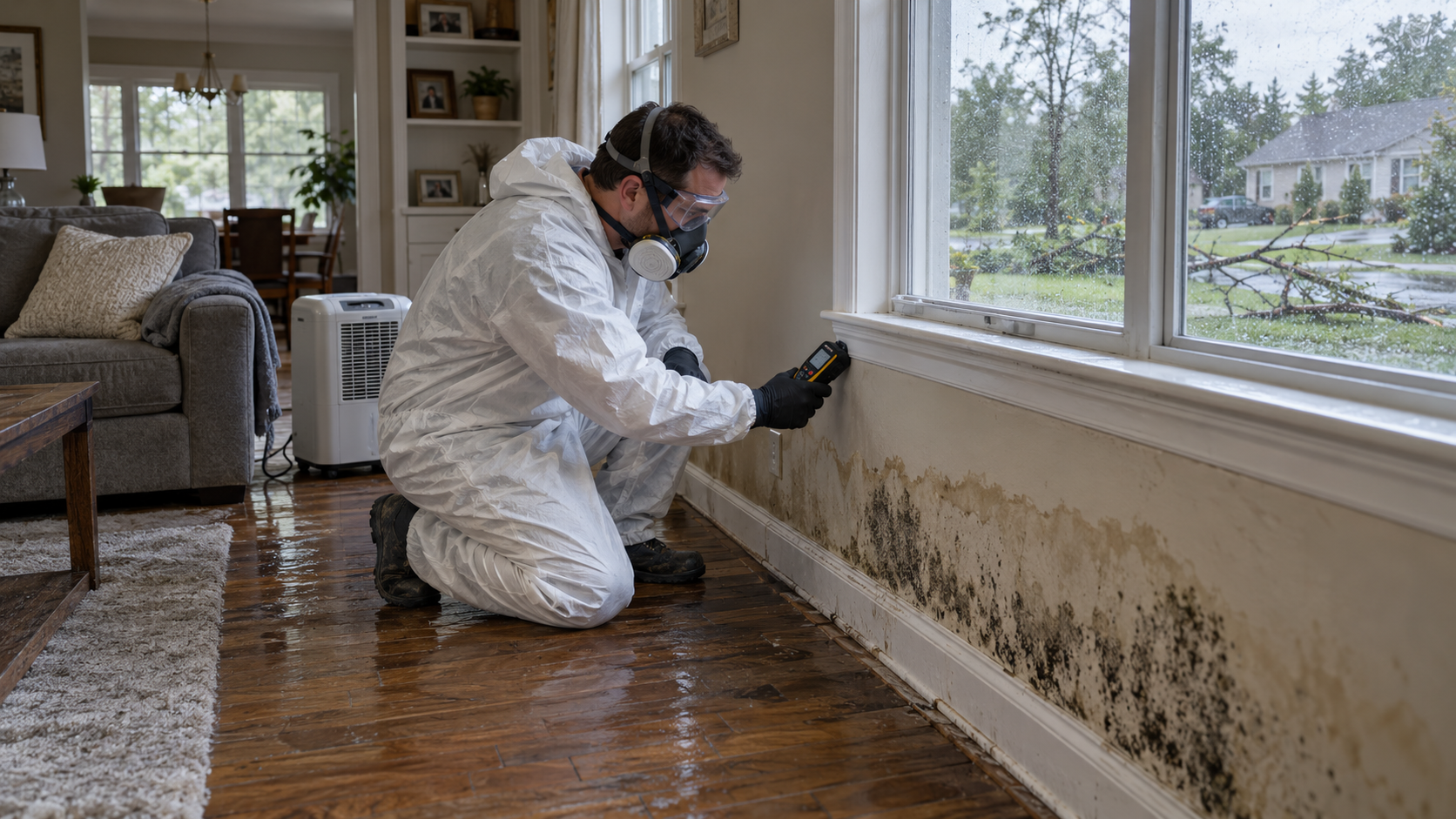
- The EPA’s own position: if you can see mold, sampling is usually unnecessary. Find the moisture and fix it.
- Testing earns its cost in specific situations — clearance after remediation, hidden mold, real estate transactions, and insurance or landlord disputes.
What a mold air quality test actually measures
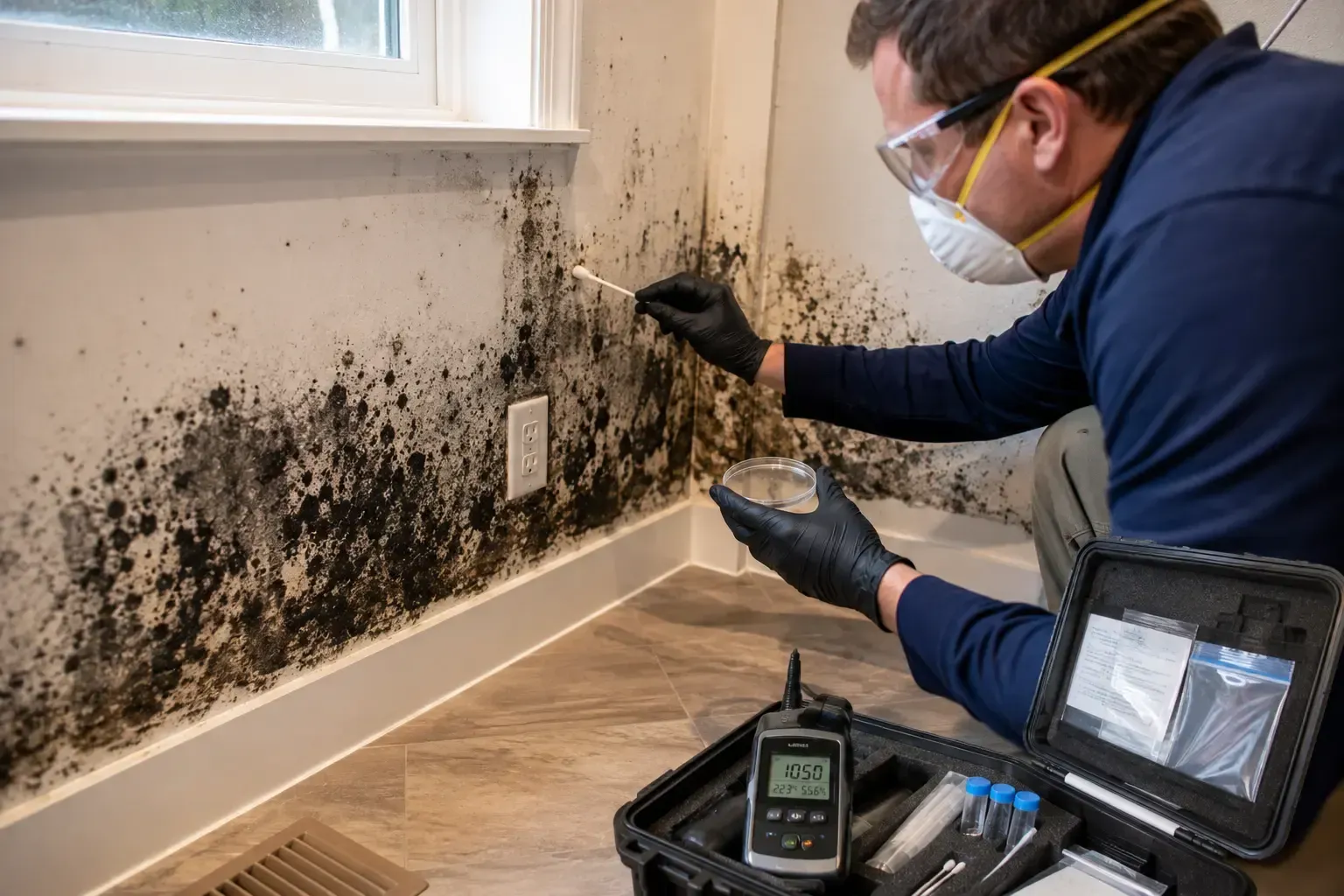
A calibrated pump draws air at a fixed rate — typically 15 liters per minute for five minutes — through a spore trap cassette. Airborne particles impact a sticky surface inside. At an accredited lab, a microscopist scans the slide at 400–600x, counts spores by genus, and extrapolates to spores per cubic meter. That is the whole measurement: a snapshot of what was floating in one room during one five-minute window.
It captures both living and dead spores, which matters, because dead spores still trigger allergic responses. What it cannot tell you is equally important:
- Whether mold is actively colonizing building materials, or whether spores simply drifted in from outside
- Whether the spores are viable
- Species, in many cases — Aspergillus and Penicillium are nearly indistinguishable under standard light microscopy, which is why labs report them together as “Aspergillus/Penicillium-like”
- Whether an intermittent source exists. A colony inside a wall cavity that sheds spores episodically can be missed by a five-minute sample
- Whether anyone in the household is being harmed
The outdoor sample is the most important number on your report
Mold spores are in outdoor air everywhere, always, and some fraction enters every building. An indoor count only means something compared against outdoor air sampled the same day. In a healthy building, indoor concentrations are equal to or lower than outdoor; counts substantially exceeding outdoor point to an indoor amplification source.
The seasonal swing makes this concrete. A summer outdoor sample in a climate like Raleigh’s might return 10,000–30,000 spores per cubic meter; a winter sample might return 500–2,000. An indoor reading of 8,000 spores/m³ is unremarkable in one context and alarming in the other. The EPA states it plainly: after remediation, “the types and concentrations of mold in indoor air samples should be similar to those in the local outdoor air.” If a report contains no outdoor control, it is not a usable report.
Raleigh has a specific problem here
North Carolina does not monitor outdoor mold spores. NC DEQ has run a pollen sampler in Raleigh on Reedy Creek Road since 1999 — but it collects tree, grass, and weed pollen only. There is no state fungal monitoring in the Triangle and no long-term local baseline to check a result against, which makes the same-day outdoor control not merely best practice here but the only reference point available.
It also complicates symptom attribution. Raleigh has one of the longest allergy seasons in the country, running February through November — so when someone reports congestion in April, pollen is a live alternative explanation.
How to read the genera on your report
The genus breakdown carries far more diagnostic weight than the total count.
- Stachybotrys chartarum. Heavy, sticky spores that do not aerosolize easily, so even low indoor counts are significant — becoming airborne at all suggests substantial growth. Finding it typically triggers a remediation recommendation.
- Chaetomium globosum. Another water-damage indicator requiring prolonged moisture. Present indoors but absent outdoors is a strong signal of an interior problem.
- Aspergillus / Penicillium. Common in both indoor and outdoor air. Elevated indoors relative to outdoors is the most common indicator of hidden crawl space or wall cavity growth.
- Cladosporium. The most common outdoor genus. High spring and summer counts are normal; indoor levels near or below outdoor are unremarkable.
There is no “safe” spore count — and that is official
This is where a great deal of mold marketing goes wrong. Three authorities have addressed it directly.
The EPA: “Standards or Threshold Limit Values (TLVs) for airborne concentrations of mold, or mold spores, have not been set… Sampling cannot be used to check a building’s compliance with federal mold standards because there are none.”
The CDC: “CDC does not recommend… routine environmental sampling for mold.” And the WHO’s 2009 guidelines: “No quantitative health-based guideline values or thresholds can be recommended.”
So when a company tells you your count “exceeds the safe limit,” ask which limit. There isn’t one. A good report compares indoor to outdoor, evaluates genus distribution, and interprets both against what the inspector physically found.
The EPA does not recommend routine testing
This is the part most testing companies leave out. The EPA’s position: “In most cases, if visible mold growth is present, sampling is unnecessary.”
The logic is sound. If you can see mold, or smell that musty, earthy odor, you already have your answer. Spending $500 to confirm what your eyes told you is money better spent finding the water source and fixing it — a test does not remove a single spore. We would rather tell you that up front than sell you a test you do not need.
When testing is genuinely worth paying for
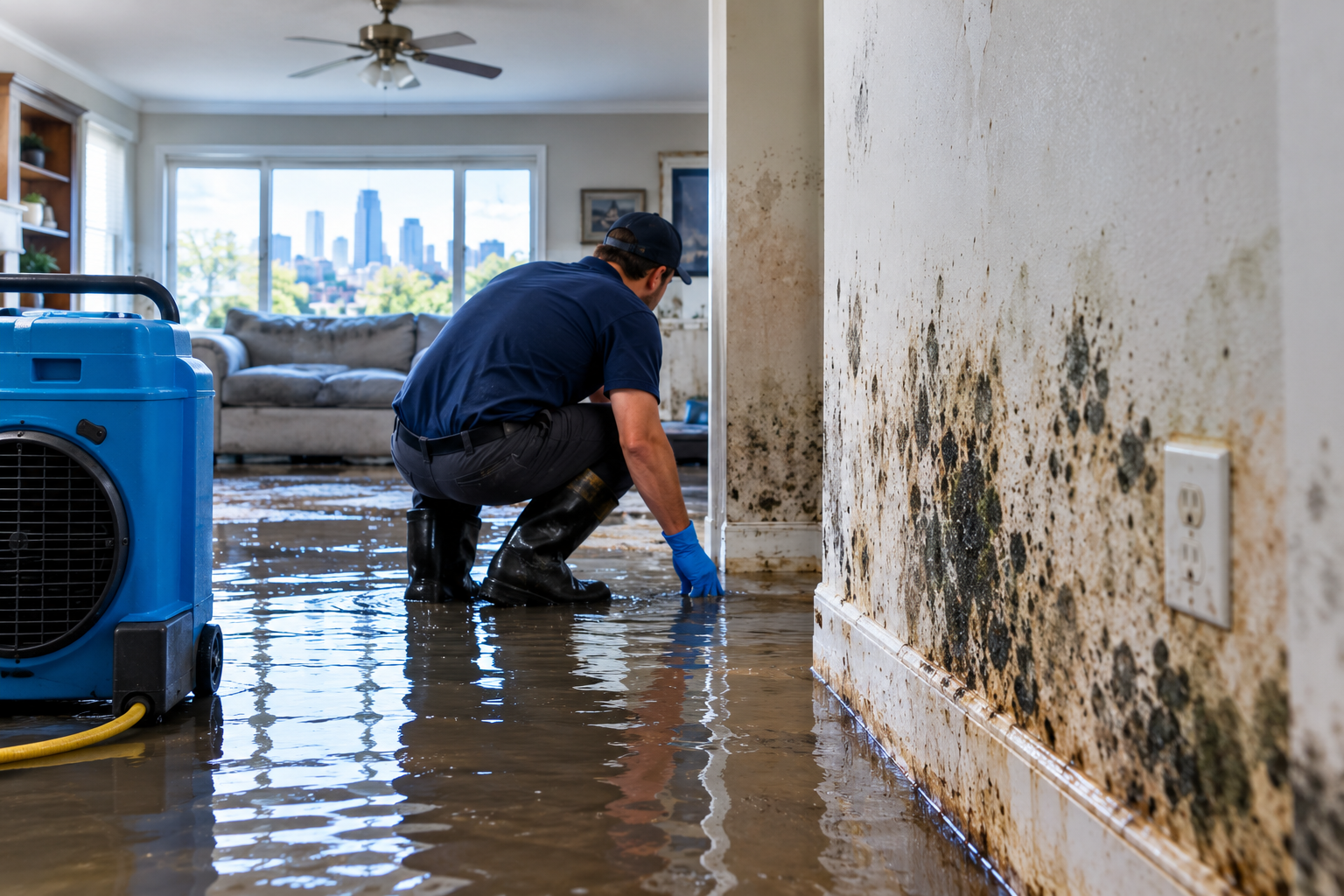
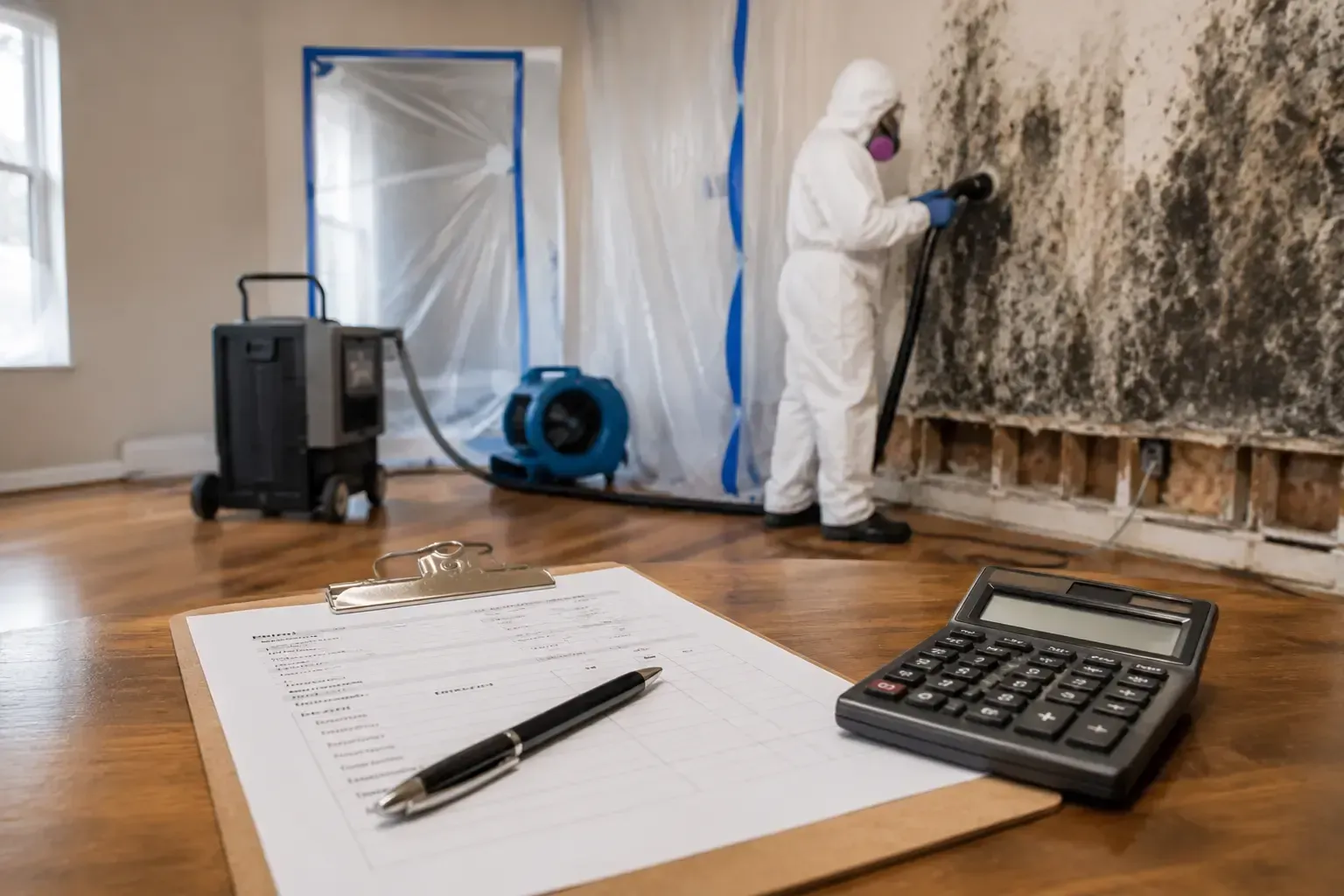
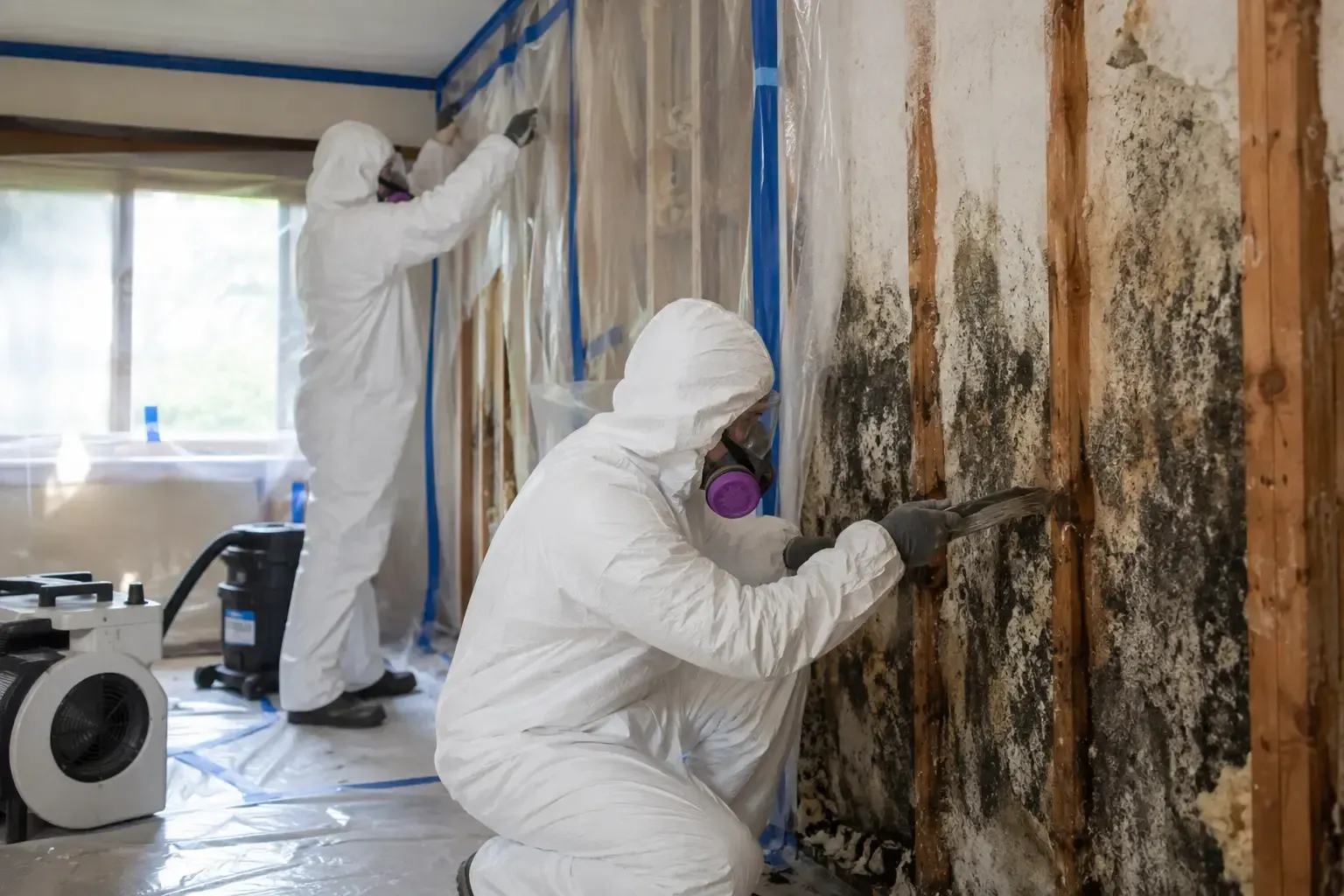
- Post-remediation clearance. The most defensible use of mold testing. ANSI/IICRC S520-2024 requires verification as the final step of any significant remediation — including verifying a previous contractor’s work.
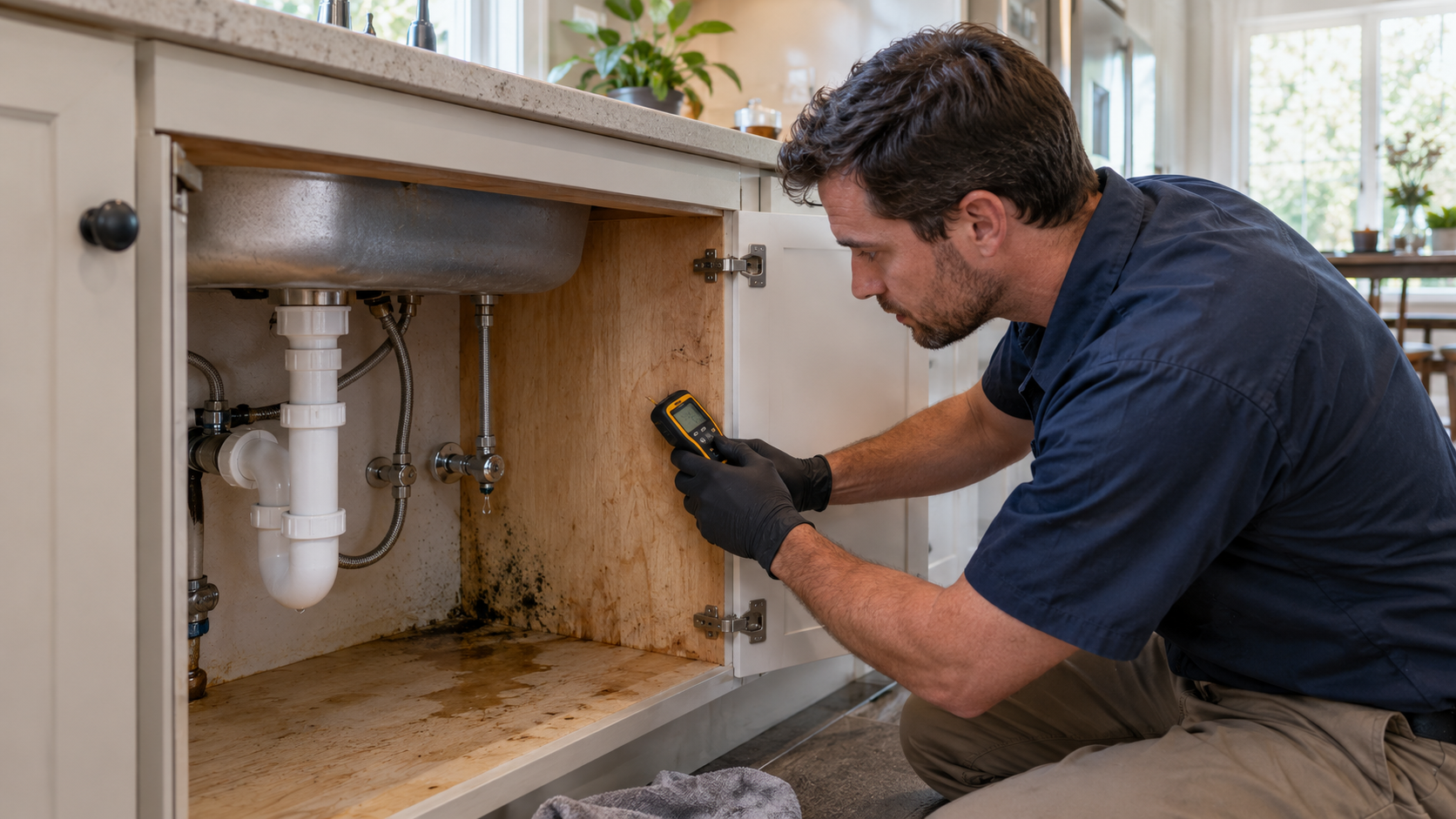
- Hidden mold with no visible source. Persistent musty odor, a documented water intrusion, or a space that cannot be visually inspected.
- Real estate transactions. Buyer due diligence on a home with water history, protecting both sides against post-sale disputes.
- Health complaints with no visible mold. When a physician suspects mold is aggravating asthma and inspection is inconclusive.
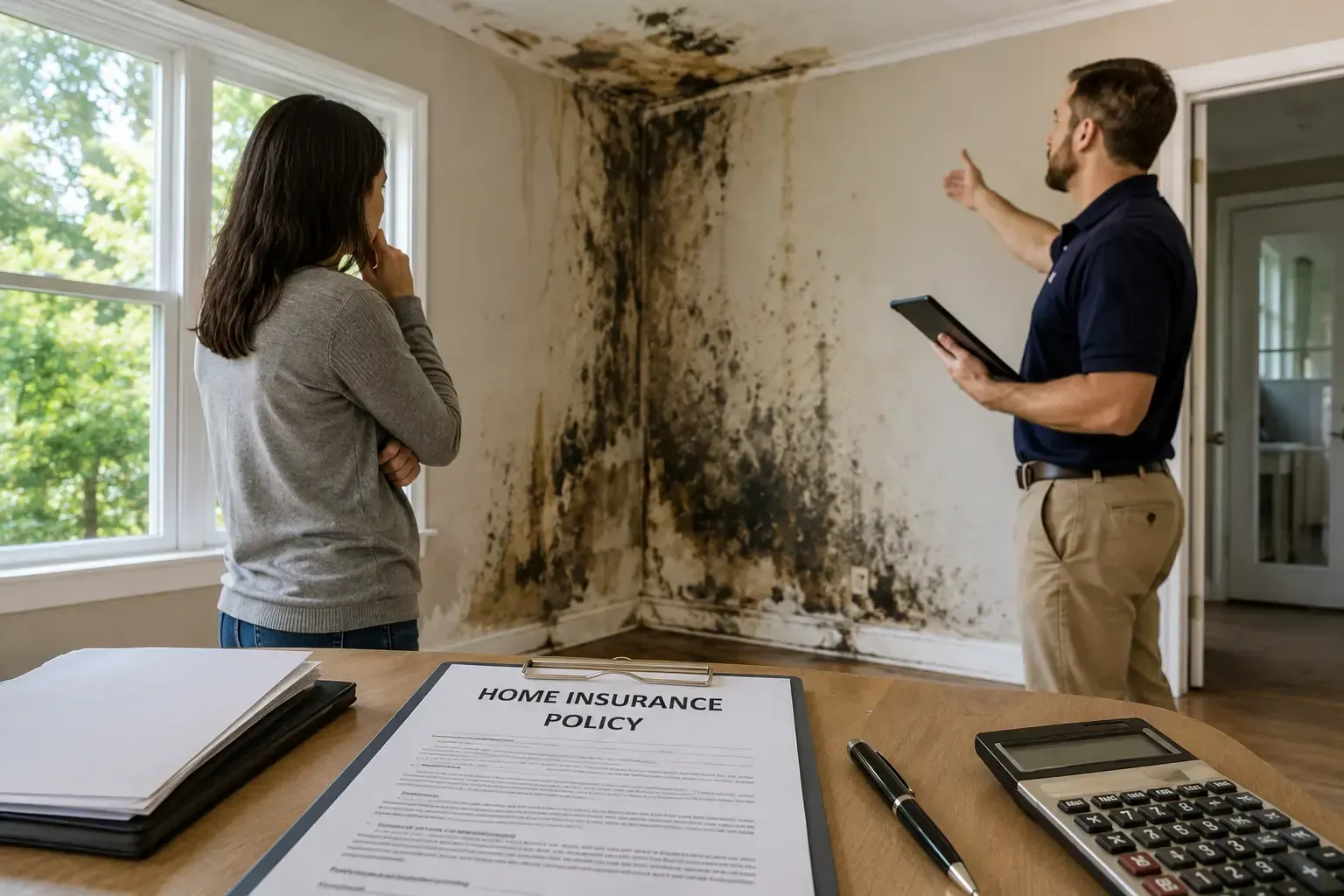
- Disputes and claims. Chain-of-custody sampling through an accredited lab creates a defensible record tied to a specific date.
Why your remediation contractor should not grade their own homework
This is worth saying even though we do remediation work. ANSI/IICRC S520-2024 is explicit that post-remediation verification counts as a PRV only when performed by an independent third party. A contractor who remediates and then certifies their own work has an obvious financial conflict of interest, and many insurers require independent verification for that reason.
There is a real distinction here. Diagnostic testing during a project — establishing where a problem is and how far it extends — is normal contractor work. Final clearance is different. If you want the strongest documentation, bring in an independent assessor. Any contractor who resists that should concern you. We encourage it.
What about DIY test kits and ERMI?
The inexpensive petri dish kits sold at hardware stores have well-documented problems:
- No calibrated air volume, so results cannot be expressed in spores per cubic meter or compared against anything
- No outdoor control sample
- Viable spores only — dead spores, which are still allergenic, never grow and are missed entirely
- Fast-growing species outcompete slower ones on the media, skewing what you see
- No chain of custody, so the result is not defensible in a dispute
A dish left open in a room will grow something — it will grow something in a perfectly healthy house too. AIHA and ACGIH do not recommend them, and the EPA advises that sampling “should be conducted by professionals who have specific experience in designing mold sampling protocols… and interpreting results.”
ERMI deserves its own caution. The Environmental Relative Moldiness Index uses DNA analysis of settled dust to score 36 mold species, and it is marketed aggressively — but the EPA, whose own researchers developed it, states ERMI “is a research tool and is not recommended for use except as a research tool.” Treat any ERMI score you are handed with skepticism.
What testing costs in Raleigh
| Service | Typical cost |
|---|---|
| Visual inspection, no sampling | $300 – $600 |
| Standard air test (1 indoor + 1 outdoor) | $250 – $450 |
| Whole-home inspection, 3–5 samples | $500 – $900 |
| Individual lab sample (air or surface) | $25 – $75 |
| Post-remediation clearance test | $200 – $500 |
| ERMI dust test | $200 – $500 |
Why crawl spaces show up in Raleigh air tests
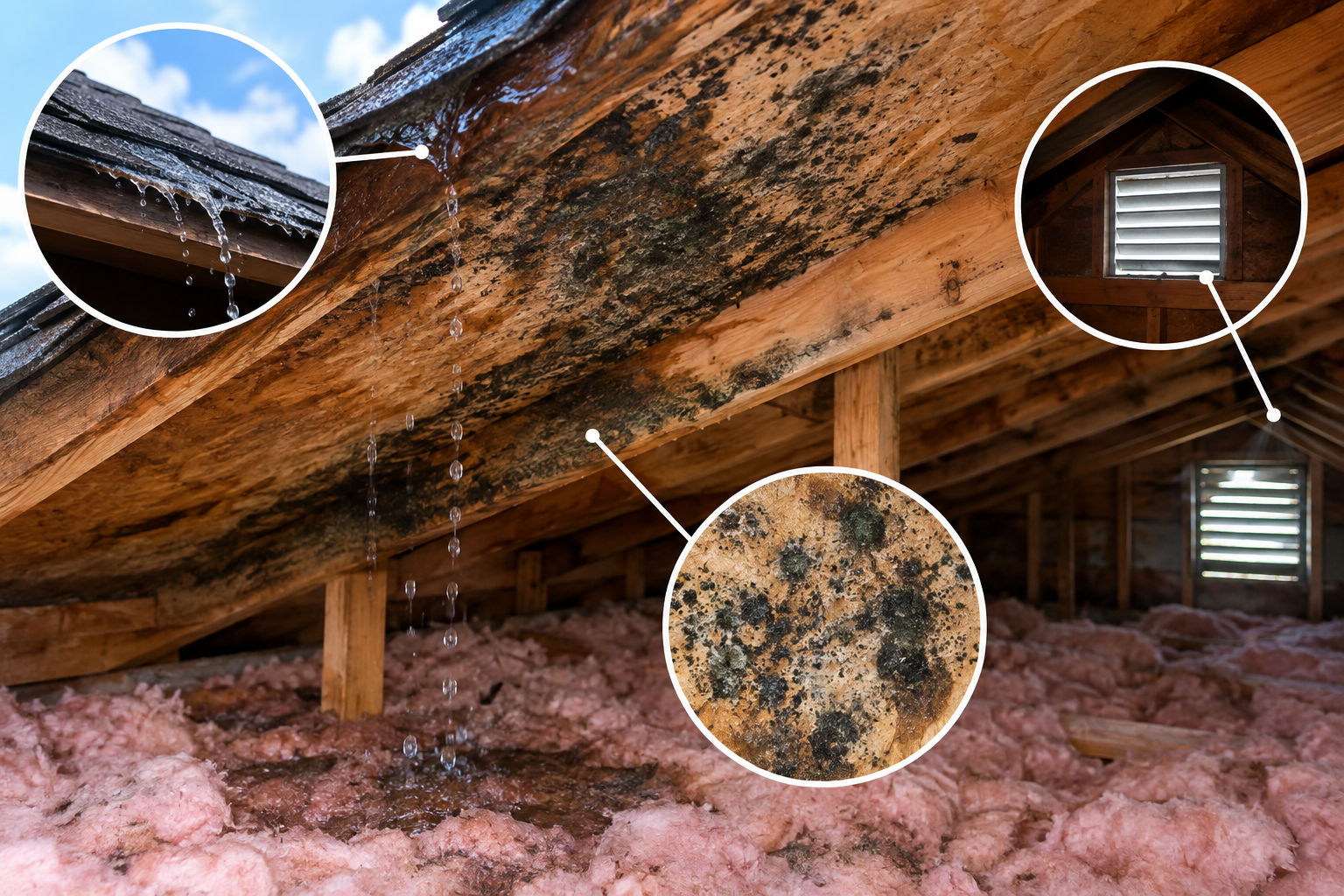
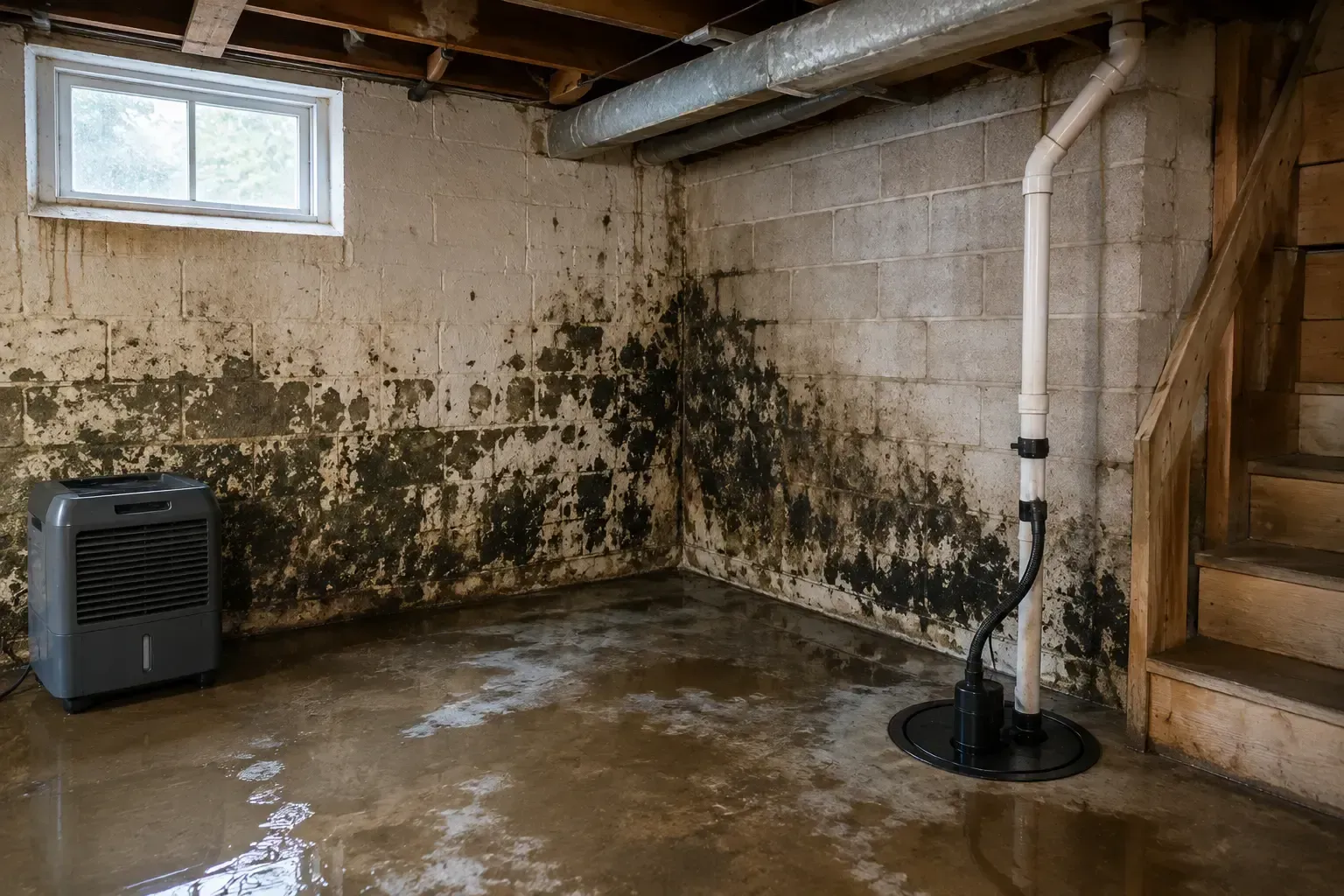
When a Raleigh home returns elevated Aspergillus / Penicillium counts with no visible mold in the living space, the crawl space is the first place to look. A Duke University study of 238 North Carolina homes found the HVAC system carried viable mold spores from the crawl space into the living area in 19% of them. If your ductwork runs through the crawl space — as it does in most Triangle homes built before the 2004 closed-crawl-space code — sample that pathway specifically.
How to choose a tester in North Carolina
North Carolina does not license mold assessors or inspectors — NC State University’s Cooperative Extension confirms no state certification program exists. So check what does carry weight:
- Is the lab AIHA EMLAP-accredited? That means results came out of a documented quality system under ISO/IEC 17025 — not just a technician with a microscope.
- Does the inspector hold a recognized credential? ACAC’s CMI or CIE, or IICRC certification.
- Does the protocol include an outdoor control sample? If not, walk away.
- Does the report interpret results, or just print numbers? A table of spore counts with no narrative is half a deliverable.
- Is the inspection visual and moisture-based first? Sampling without that groundwork is guesswork.
Frequently asked questions
How much does mold air quality testing cost in Raleigh?
A standard air test with one indoor and one outdoor sample typically runs $250–$450. A whole-home inspection with three to five samples runs $500–$900. Clearance testing is a separate $200–$500.
Is there a safe level of mold spores in the air?
No federal or international standard exists — the EPA, CDC, and WHO have all declined to set threshold values. Results are interpreted by comparing indoor samples against a same-day outdoor control and examining which genera are present.
Do I need a mold test if I can already see mold?
Usually not. The EPA states that if visible mold growth is present, sampling is generally unnecessary. The productive next step is fixing the moisture source. Testing may still make sense afterward, as clearance verification.
Are DIY mold test kits accurate?
Petri dish kits have real limitations: no calibrated air volume, no outdoor control, and they capture only viable spores. A dish left open in a healthy home will still grow colonies.
Should the company doing my remediation also do the clearance test?
For final verification, no. ANSI/IICRC S520-2024 defines post-remediation verification as independent third-party work, and many insurers require it. Diagnostic testing during a project is normal contractor work.
Free, no-obligation crawl space inspection. 60-minute response in our service areas.
Mold Warrior is an IICRC Certified Firm with 5+ years remediating mold of every known type. Family owned, available 24/7. Serving Raleigh, Cary, Apex, Wake Forest, Holly Springs, Garner, Fuquay-Varina, Morrisville, Knightdale, Rolesville, and Clayton.