Ice Dams and Attic Mold in Michiana: What to Watch For
The stain on your bedroom ceiling showed up in March, not January. That timing is not a coincidence, and it usually points somewhere most homeowners never look.
South Bend averages 64.5 inches of snow a year — the most of any city in Indiana, according to the National Weather Service office in Northern Indiana. That snow sits on your roof for months. What it does up there while you are not watching is the most overlooked cause of attic mold in Michiana.
Key Takeaways
• Ice dams are an insulation problem, not a weather problem. Heat escaping your living space melts roof snow, which refreezes at the cold eaves and backs water up under the shingles.
• The mold usually appears weeks after the leak. Wet insulation and sheathing hold moisture long after the ice is gone, which is why ceiling stains surface in late winter and spring.
• Ice dam water damage is one of the few water losses insurance often does cover. Michigan's insurance regulator draws the line at top-down versus bottom-up.
• Killing mold is not the same as removing it. The EPA is explicit that dead spores still cause reactions.
• Neither Indiana nor Michigan licenses mold remediators. Certification is the only real filter you have.
Why Michiana Roofs Are Built for Ice Dams
Lake Michigan rarely freezes over completely. Northwesterly winds pick up moisture off the open water and drop it downwind as lake-effect snow — and South Bend sits about twenty miles from the southern end of the lake, directly in the path.
Two other numbers matter. January in South Bend averages a high of 30.4°F and a low of 16.1°F (NWS). That is the ice dam sweet spot: cold enough at night to refreeze, warm enough during the day to keep melting. And measurable precipitation falls on roughly 148 days a year here. The snowpack gets replenished all season.
Homes across South Bend, Mishawaka, Niles, and Benton Harbor also skew old — Census ACS estimates put South Bend's median build year around 1955, with roughly 28% of homes built before 1940. Those attics were insulated to a different standard, if they were insulated at all.
How an Ice Dam Becomes Attic Mold
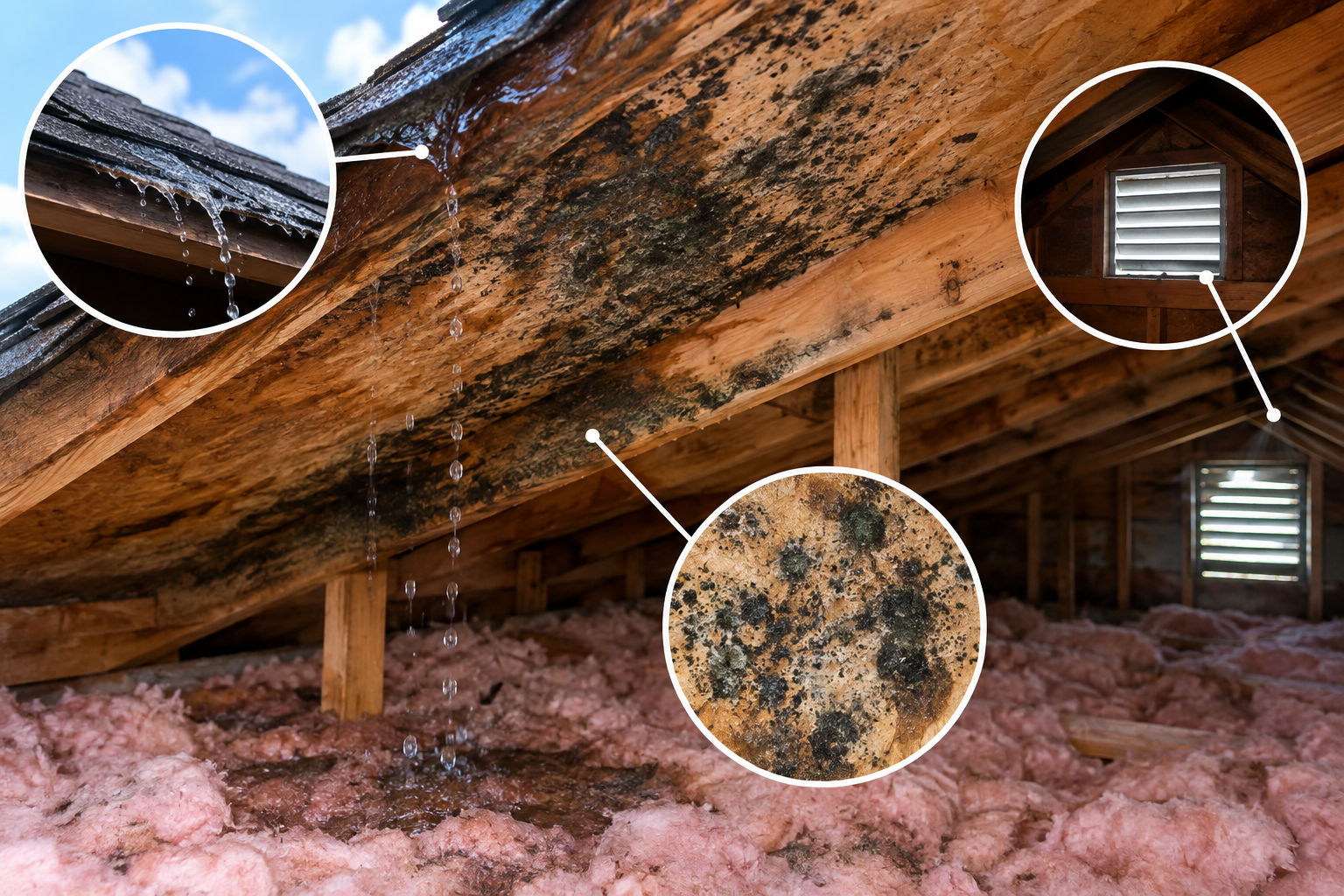
Michigan State University Extension describes the mechanism plainly: attic heat warms the roof and melts the snow on it, and that meltwater runs down under the snowpack and refreezes at the eaves — the coldest part of the roof.
The ridge of ice that forms there acts like a dam. Water pools behind it with nowhere to drain, works its way back up under the shingles, and soaks through to the roof deck.
From there it follows a predictable path:
1. Water saturates the roof sheathing from underneath.
2. It drips into the attic insulation below.
3. Wet insulation compresses, loses most of its R-value, and stops drying out.
4. That warm, damp, dark cavity becomes an ideal growth surface.
The insulation failure is what makes it a cycle rather than an incident. Less insulation means more heat loss, more heat loss means more melting, and next winter's dam forms faster.
Why You See It in Spring
Mold does not appear the day the leak starts. It needs sustained moisture, and attic materials hold water for a long time after the visible ice is gone.
That lag is why the ceiling stain, the musty smell in an upstairs closet, or the dark speckling on the underside of the roof deck tends to show up in March and April — well after you have stopped thinking about the snow. By then the growth has usually had weeks to establish.
Signs worth taking seriously:
• Dark streaking or speckling on roof sheathing and rafters
• Insulation that is matted, discolored, or damp to the touch
• A musty smell in upstairs rooms that gets stronger when the HVAC runs
• Ceiling stains near exterior walls
• Rusted nail tips protruding through the sheathing
• Frost on the underside of the roof deck in winter
What Insurance Usually Covers
This is where ice dams differ from most water problems, and it works in your favor.
The Michigan Department of Insurance and Financial Services puts it this way: water coming from the top down — including "ice dam seepage behind drywall" — is covered by standard homeowners policies. Water coming from the bottom up, such as foundation seepage from snowmelt, usually is not.
So the ice dam itself is typically the covered event. Two caveats worth knowing before you file:
• Coverage generally applies to the sudden water damage, not to the long-term neglect that caused it. Document the event and act quickly.
• Most policies carry a mold sublimit — commonly a few thousand dollars — separate from the water damage limit. Ask your agent what yours is before you need it.
Our team provides insurance assistance on Michiana claims and can document conditions in the format adjusters expect.
What You Can Handle Yourself
The EPA sets a clear threshold:
"If the moldy area is less than about 10 square feet (less than roughly a 3 ft. by 3 ft. patch), in most cases, you can handle the job yourself."
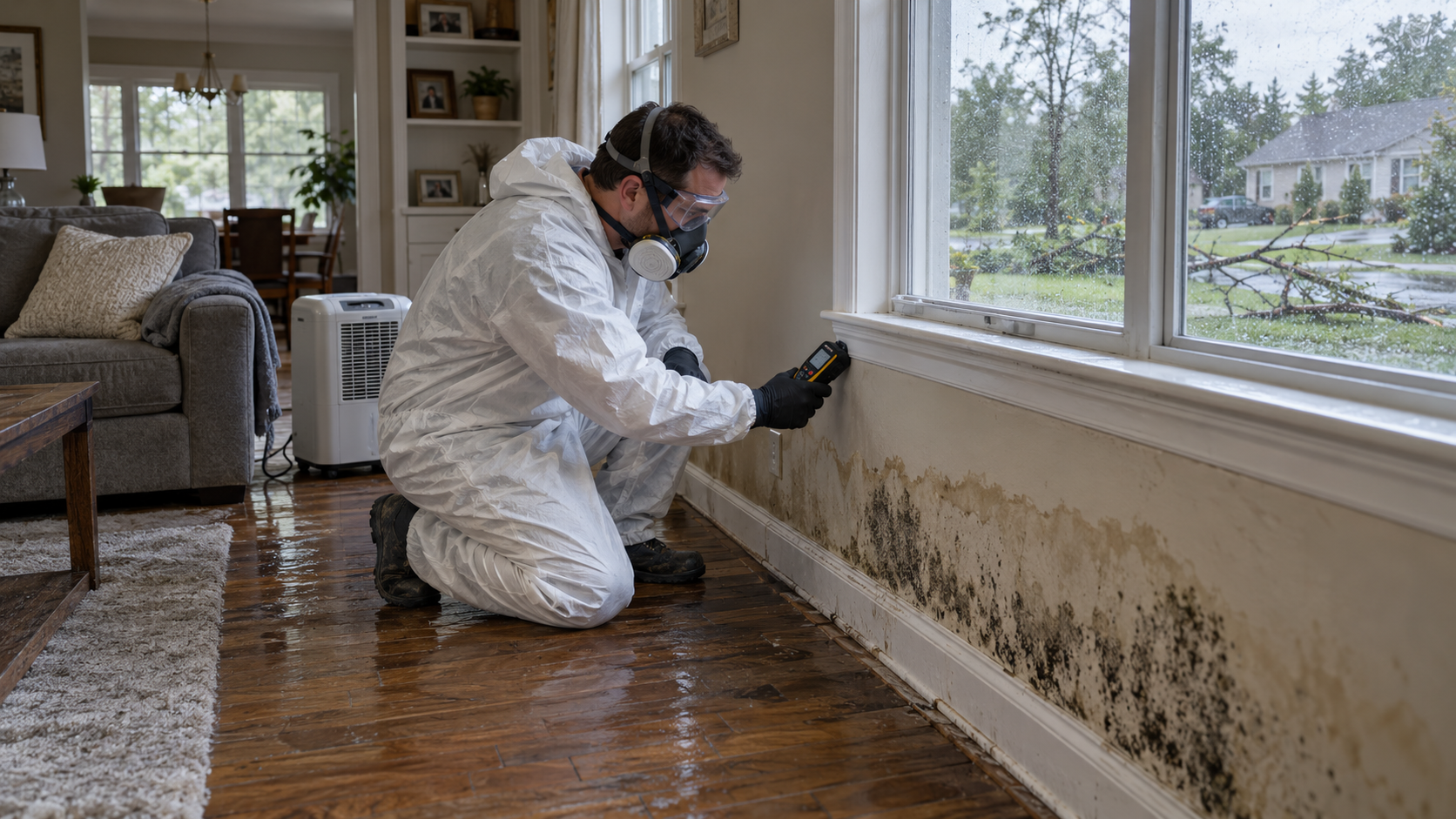
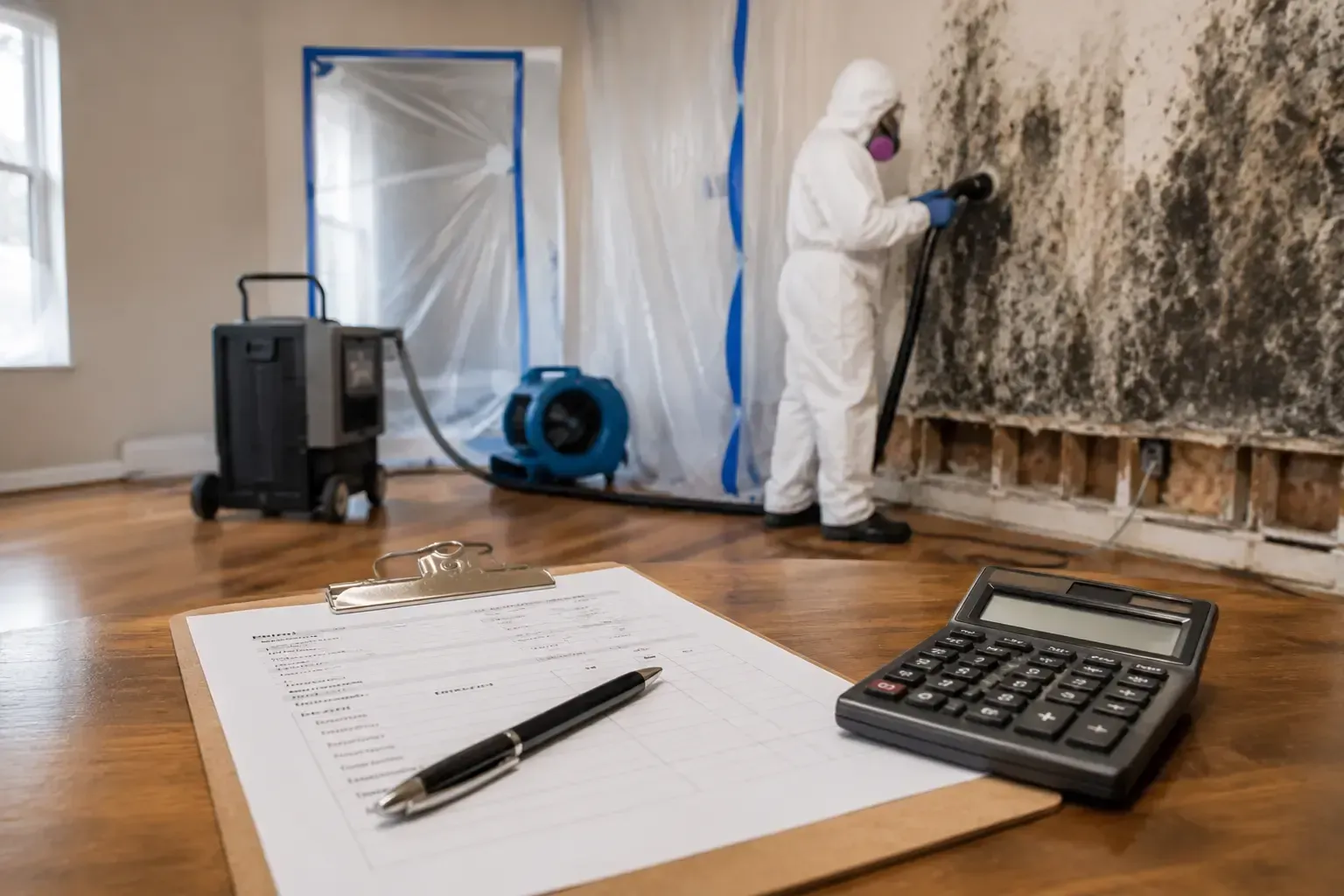
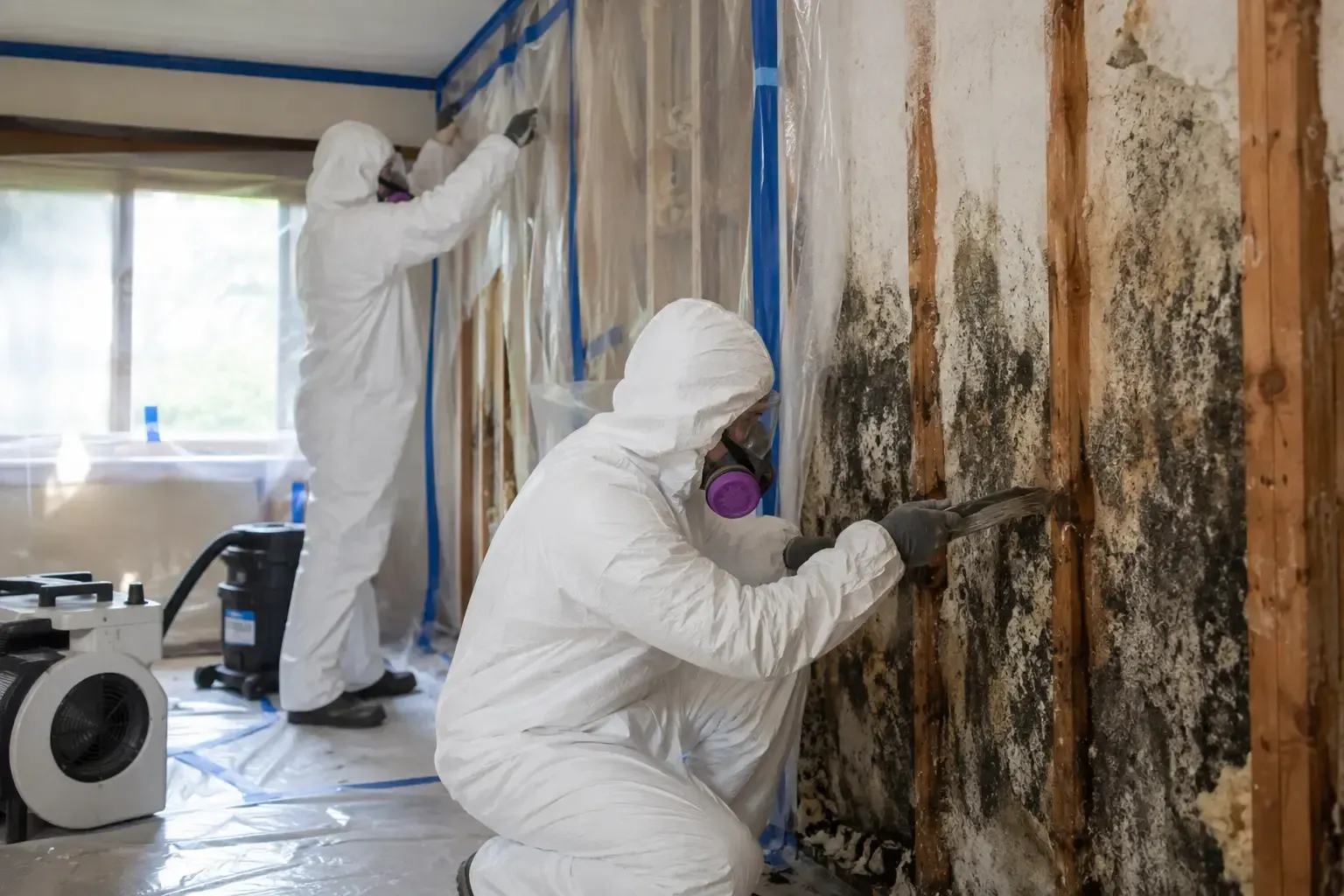
Above that, or if water damage has been extensive or your HVAC may be affected, the EPA recommends professional remediation. Attics complicate this — growth on sheathing is often far more extensive than the visible patch suggests, and disturbing it without containment sends spores through every ceiling penetration into your living space.
Killing Mold Is Not Removing It
This is the most common and most expensive misunderstanding in the industry.
The EPA states it directly:
"Dead mold may still cause allergic reactions in some people, so it is not enough to simply kill the mold, it must also be removed."
The agency also notes that "chemical biocides are not recommended as a routine practice during mold cleanup."
The ANSI/IICRC S520 standard is built on the same principle — physical source removal is the goal, not spraying something on and walking away. Porous materials that cannot be effectively cleaned come out. Semi-porous materials like framing get HEPA vacuuming and controlled cleaning.
Be skeptical of any contractor whose plan is a fogger and a warranty. Mold Warrior is an IICRC Certified Firm and handles every Michiana project directly, without subcontractors.
Fix the Cause or Pay Twice
Remediating an attic without correcting the heat loss buys you one season. The durable fix is:
• Air sealing the ceiling plane — recessed lights, bath fans, attic hatches, top plates. This matters more than adding insulation.
• Adequate insulation at the attic floor to keep the roof deck cold.
• Balanced ventilation — soffit intake vents paired with ridge or peak exhaust.
• Bath and kitchen fans vented outside, never into the attic.
One More Thing About Contractors
Neither Indiana nor Michigan licenses mold remediation contractors. There is no state exam, no state registry, and no license to check.
That makes third-party certification the only meaningful filter. Ask for the IICRC firm credential, proof of liability insurance, and a written scope that specifies containment and source removal — not just treatment.
Frequently Asked Questions
Can I just remove the ice dam and be done?
Removing it stops further intrusion, but any water already in the assembly stays there. Have the attic inspected after the melt.
Is attic mold dangerous if it stays in the attic?
Attics are rarely sealed off from living space. Recessed lights, hatches, and duct penetrations all leak air. If your HVAC equipment or ducts run through the attic, spores can distribute house-wide.
Should I test before remediating?
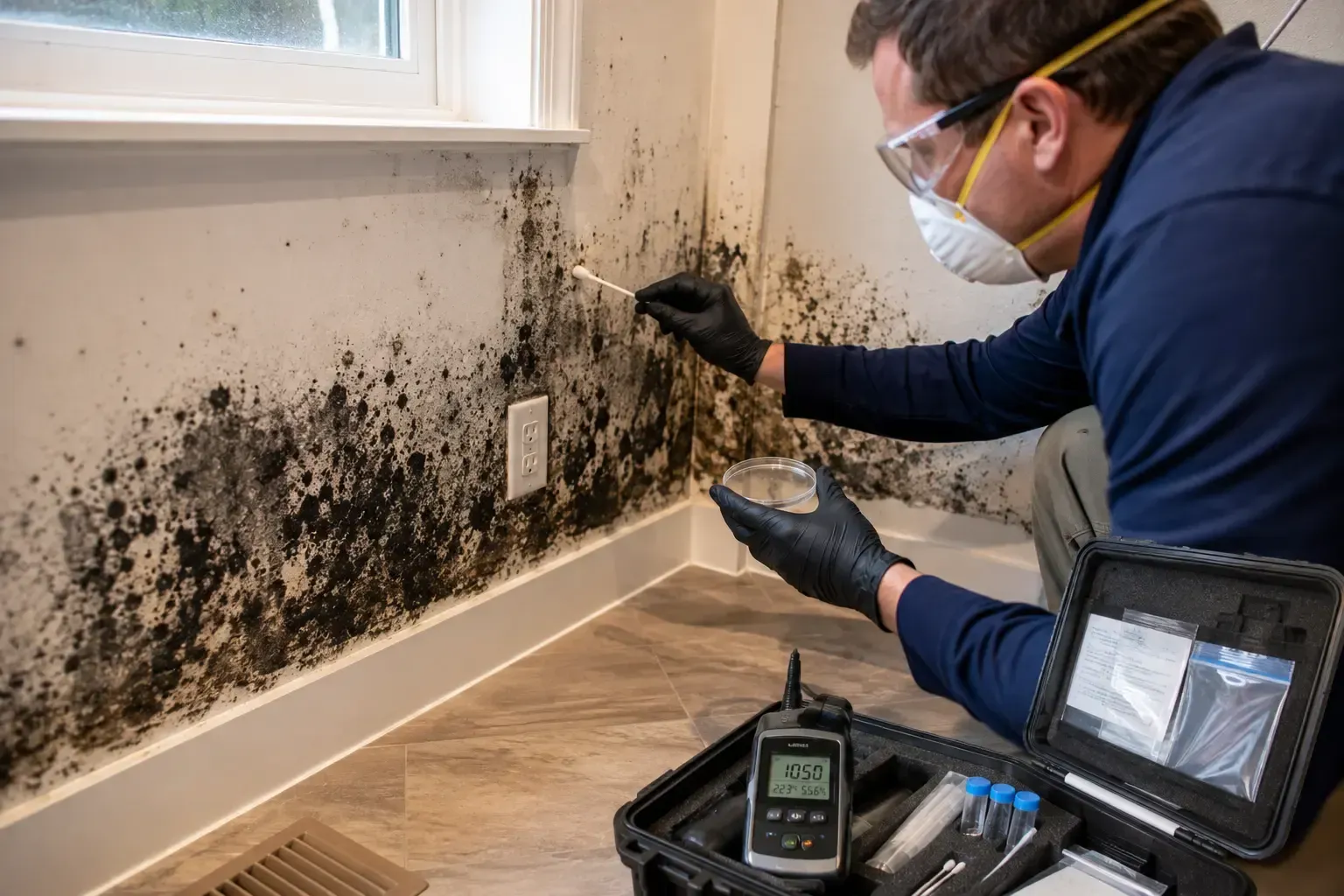
Usually not. The EPA is clear: "In most cases, if visible mold growth is present, sampling is unnecessary." Air quality testing is most useful when you smell something but cannot find the source, or want post-remediation verification.
Do roof rakes actually help?
Yes, as a stopgap. Clearing the first three to four feet of snow above the eaves removes the ice dam's fuel. It does not address the heat loss underneath.
How fast can mold grow after a leak?
Given sustained moisture and a food source like paper-faced drywall or wood, growth can begin within 24 to 48 hours.
Not Sure What Is Going On Up There
If you have a ceiling stain, a musty upstairs, or you would just rather know before next winter, we will take a look.
Mold Warrior is an IICRC Certified Firm serving South Bend, Mishawaka, Elkhart, Granger, Goshen, La Porte, Michigan City, Niles, Dowagiac, Benton Harbor, and Stevensville. In business since 2019. Every project handled directly — no subcontractors.
Free, no-obligation inspection. 60-minute response in our service areas.
Call (269) 588-4136 — answered 24/7 · Schedule an inspection