Black Mold in Kansas City Homes: Signs, Health Risks & Removal
Kansas City humidity averages 70%+ in summer and basement moisture stays high year-round. That combination breeds black mold (Stachybotrys chartarum) faster than most U.S. metros. Black mold causes serious health symptoms - and unlike common allergy molds, it requires professional remediation with full containment. This guide walks you through the visible signs, the health risks, and the safe removal process so you know exactly when to call a pro.
Key Takeaways
- True black mold (Stachybotrys) is dark green-black, slimy, and grows on cellulose materials wet for 7+ days.
- Health symptoms: persistent cough, headaches, sinus issues, fatigue - worse at home, better away.
- Always require professional remediation with containment, HEPA filtration, and post-cleanup verification testing.
How to Identify Black Mold
Not all dark mold is Stachybotrys. Common look-alikes include Cladosporium and Aspergillus niger. True black mold has these features:
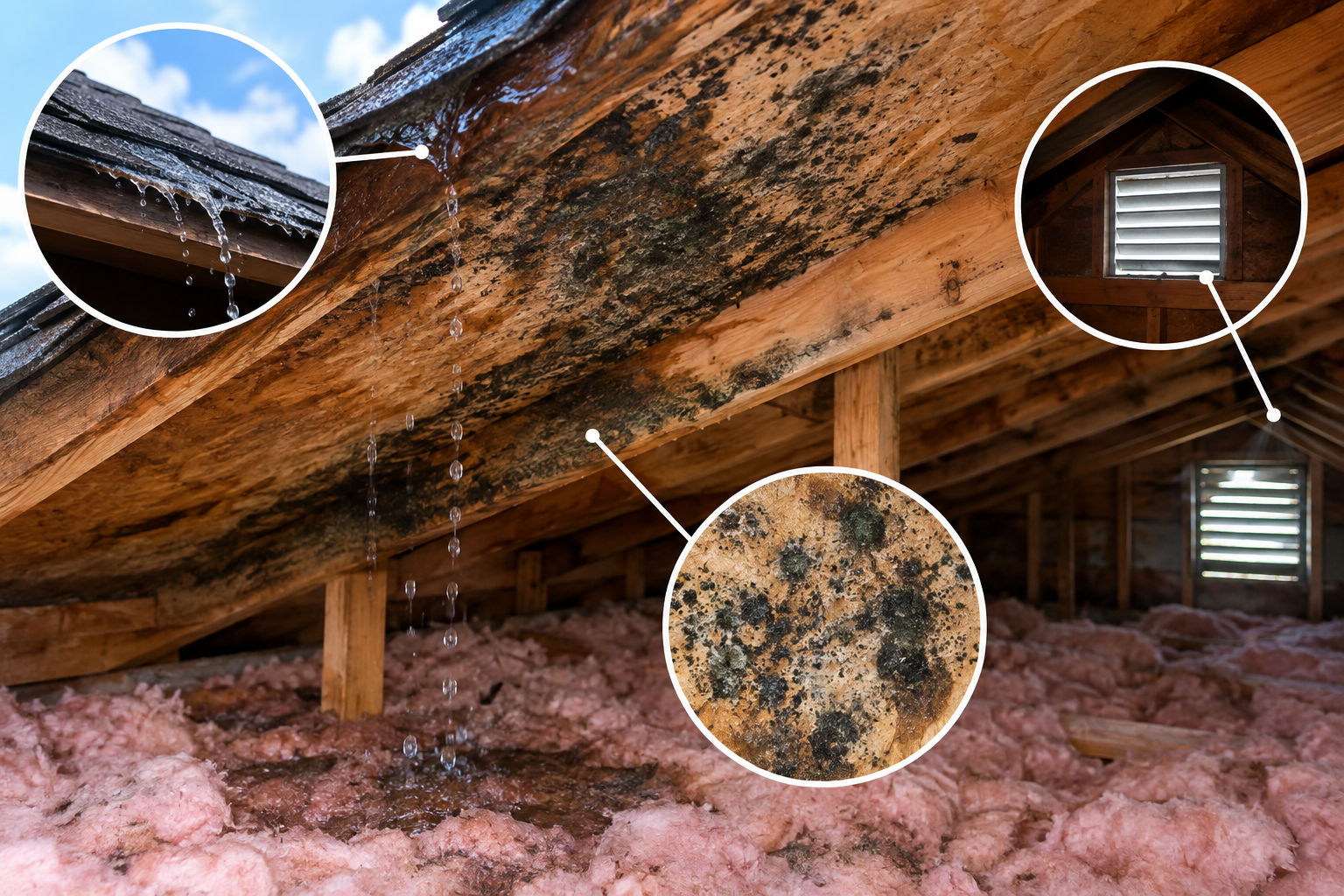
Color: Dark olive-green to black, sometimes appearing greasy or slimy when wet.
Texture: Slimy when fresh, powdery and dry-flaky when older.
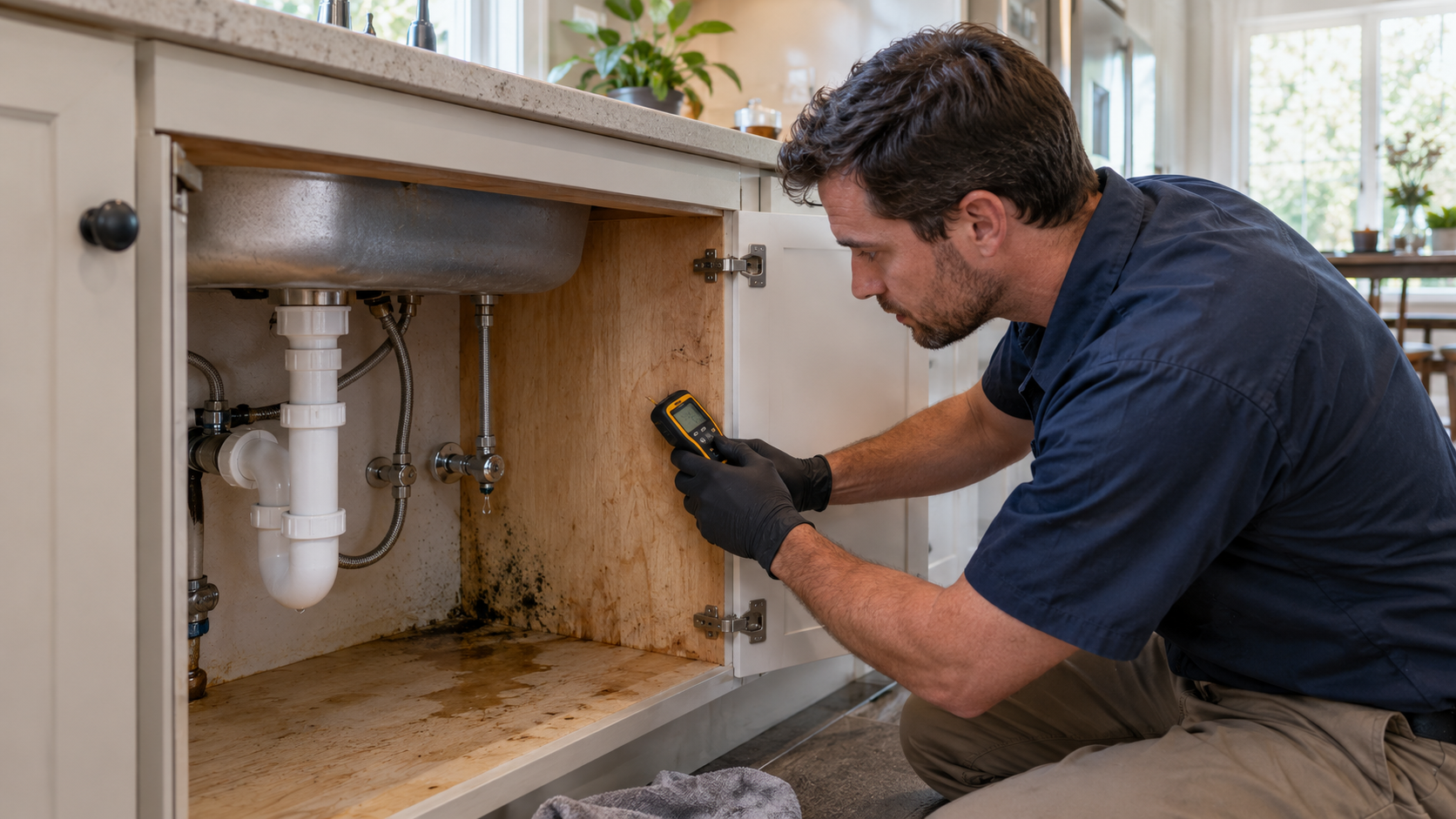
Location: Cellulose-rich materials - drywall paper, wood, ceiling tiles, cardboard, wallpaper.
Smell: Strong musty, earthy odor that intensifies with humidity.
Pattern: Round colonies that spread outward; often grows behind drywall or under flooring.
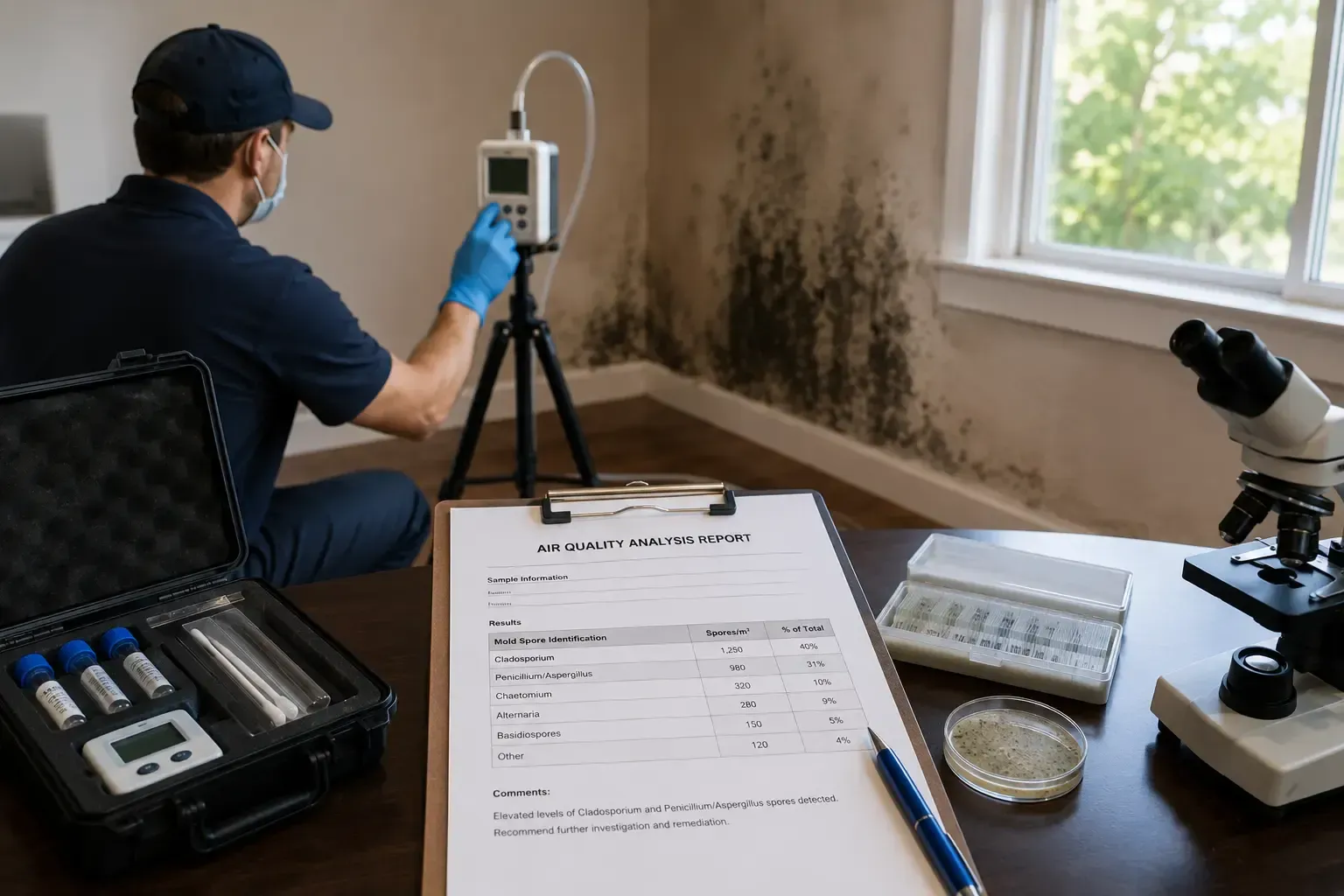
Lab testing is the only reliable identification. A mold inspector takes air and surface samples; results take 3-7 days.
Why Kansas City Homes Are Vulnerable
High Summer Humidity
Kansas City averages 70-80% humidity June through September. Indoor humidity above 60% lets mold spores germinate; above 70% lets them thrive. Most KC homes hit these thresholds without a dehumidifier.
Basement Moisture
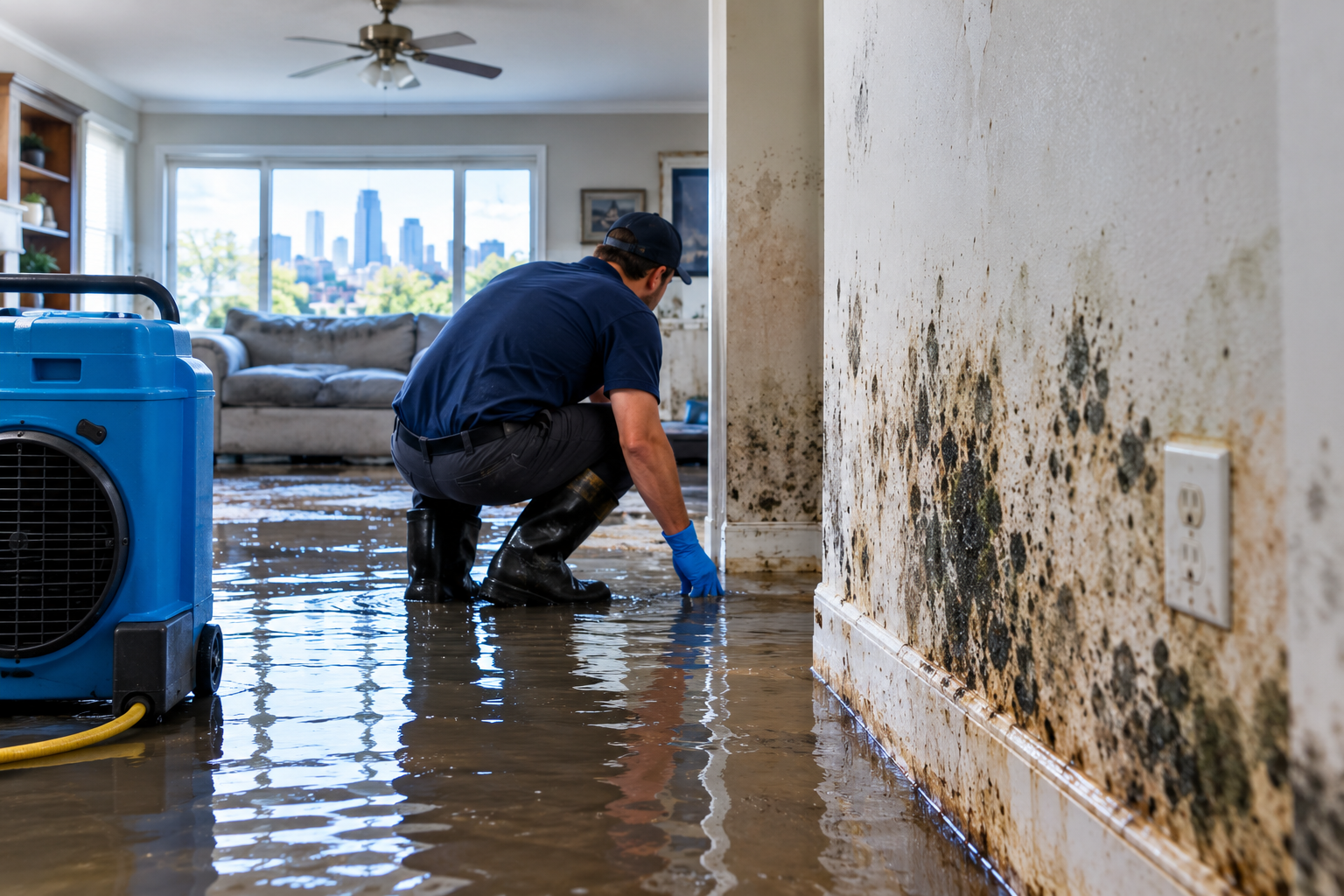
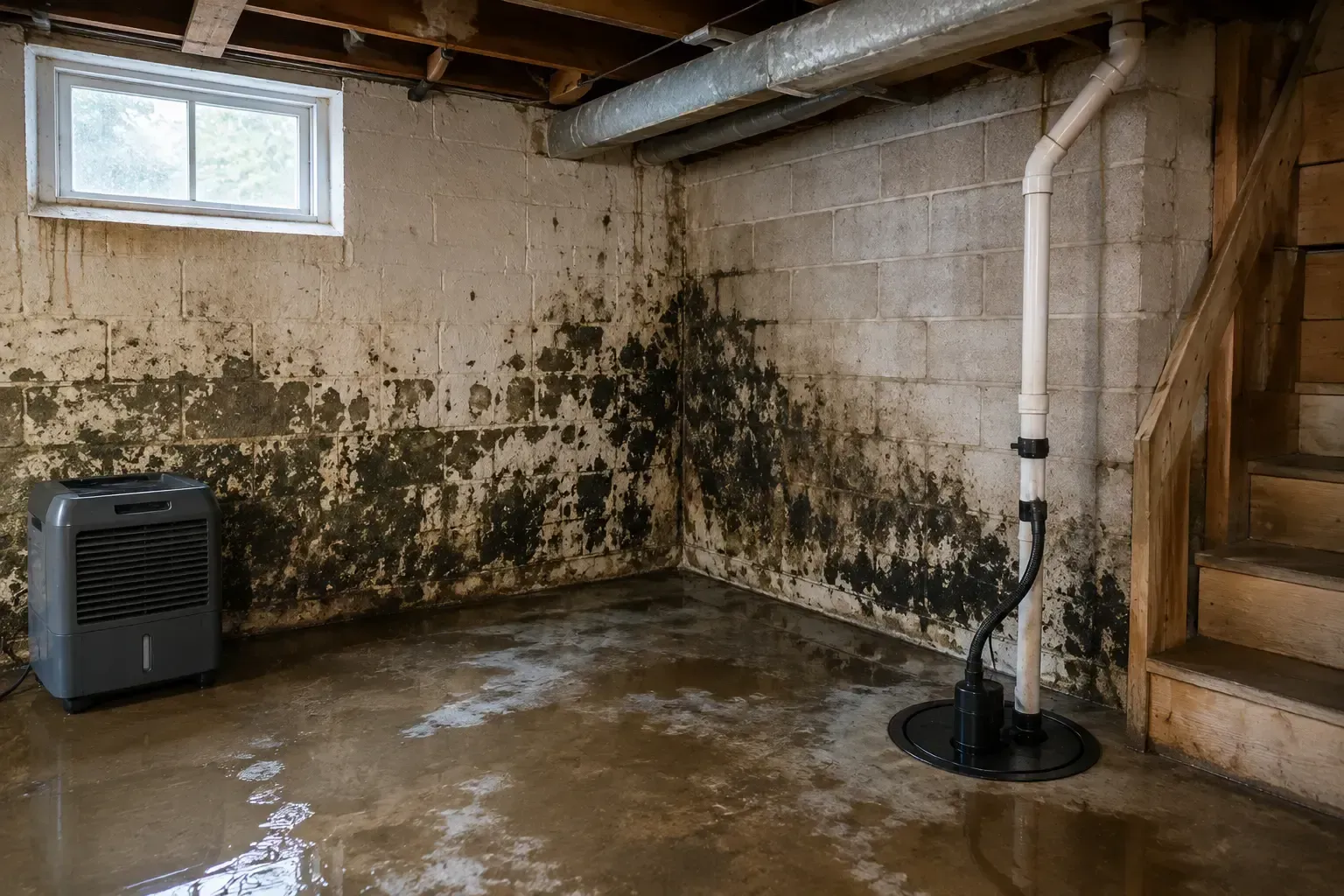
Concrete basements act as moisture wicks year-round. Many KC basements stay above 60% humidity even with central AC running. Black mold loves the cool damp environment.
Storm Damage Aftermath
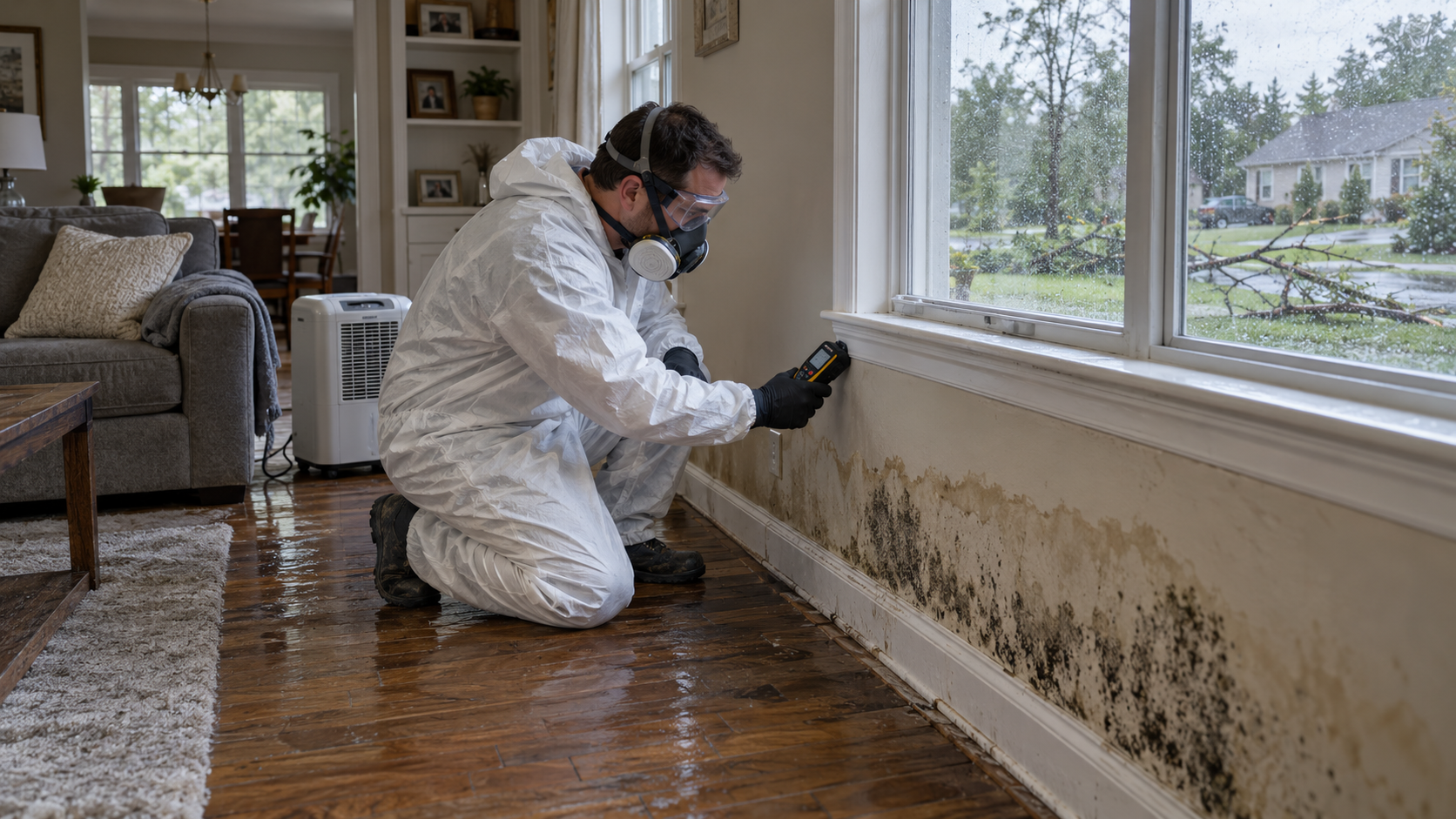
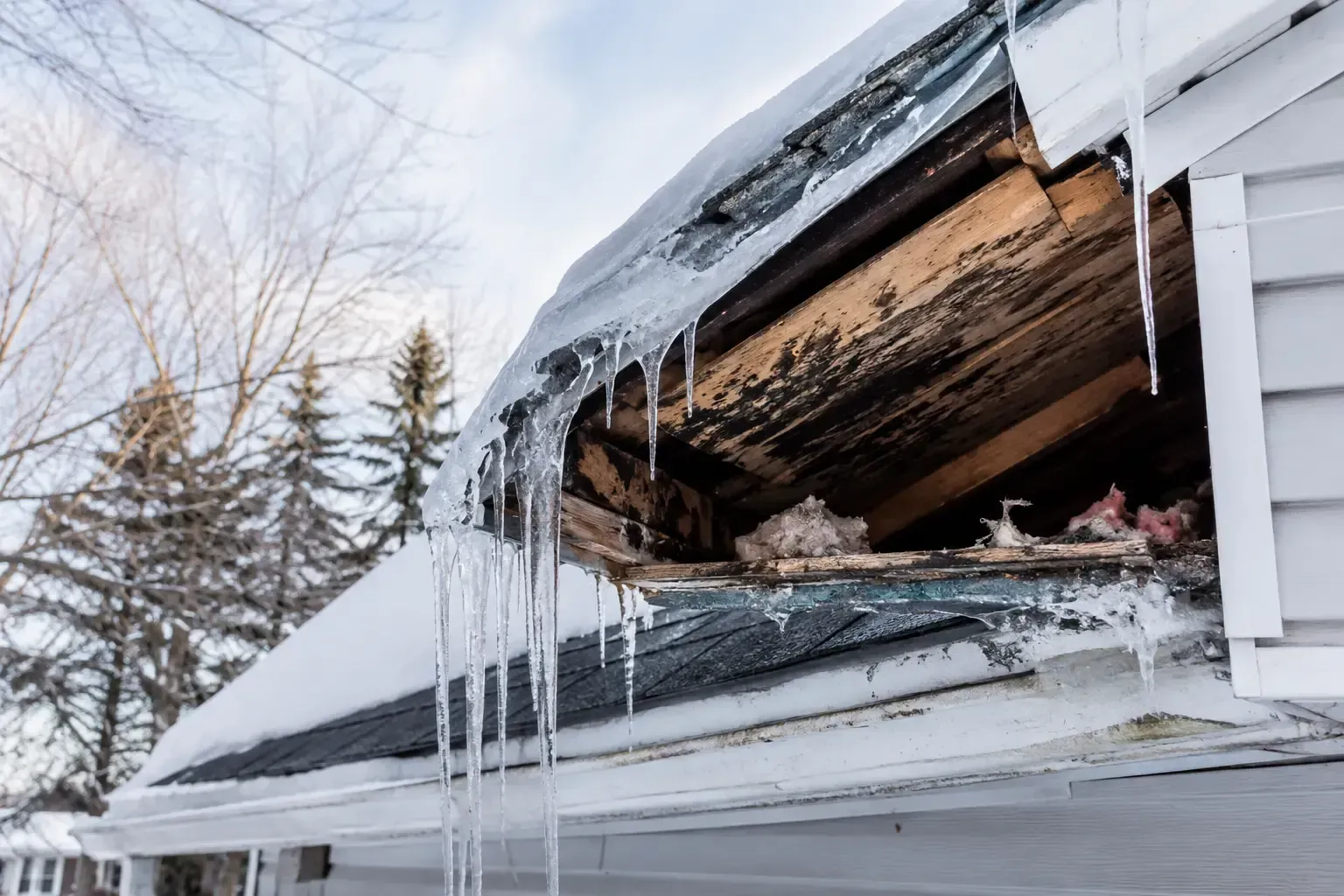
Kansas City sees regular thunderstorms and occasional tornadoes. Roof damage, wind-driven rain, and basement flooding from spring storms create the wet-for-7-days conditions that spawn Stachybotrys.
Health Risks of Black Mold Exposure
The CDC documents these symptoms from prolonged Stachybotrys exposure:
- Respiratory: persistent cough, wheezing, sinus inflammation, asthma exacerbation.
- Neurological: headaches, brain fog, memory issues, fatigue.
- Skin: rashes, hives, irritation.
- Severe (immunocompromised): pulmonary infections, hypersensitivity reactions.
- Symptoms often improve when occupants leave the home for several days. Children, elderly, and immunocompromised individuals show symptoms first.
Why DIY Bleach Does Not Work
Bleach kills surface mold on hard non-porous surfaces but cannot penetrate the porous materials (drywall, wood, carpet) where black mold actually grows. The water in bleach soaks into the porous material and feeds the surviving root structures (hyphae). The colony regrows in 2-6 weeks. Per the EPA, biocides are not recommended as routine practice during mold cleanup.
Professional Removal Process
Air-quality testing to identify species and spore counts.
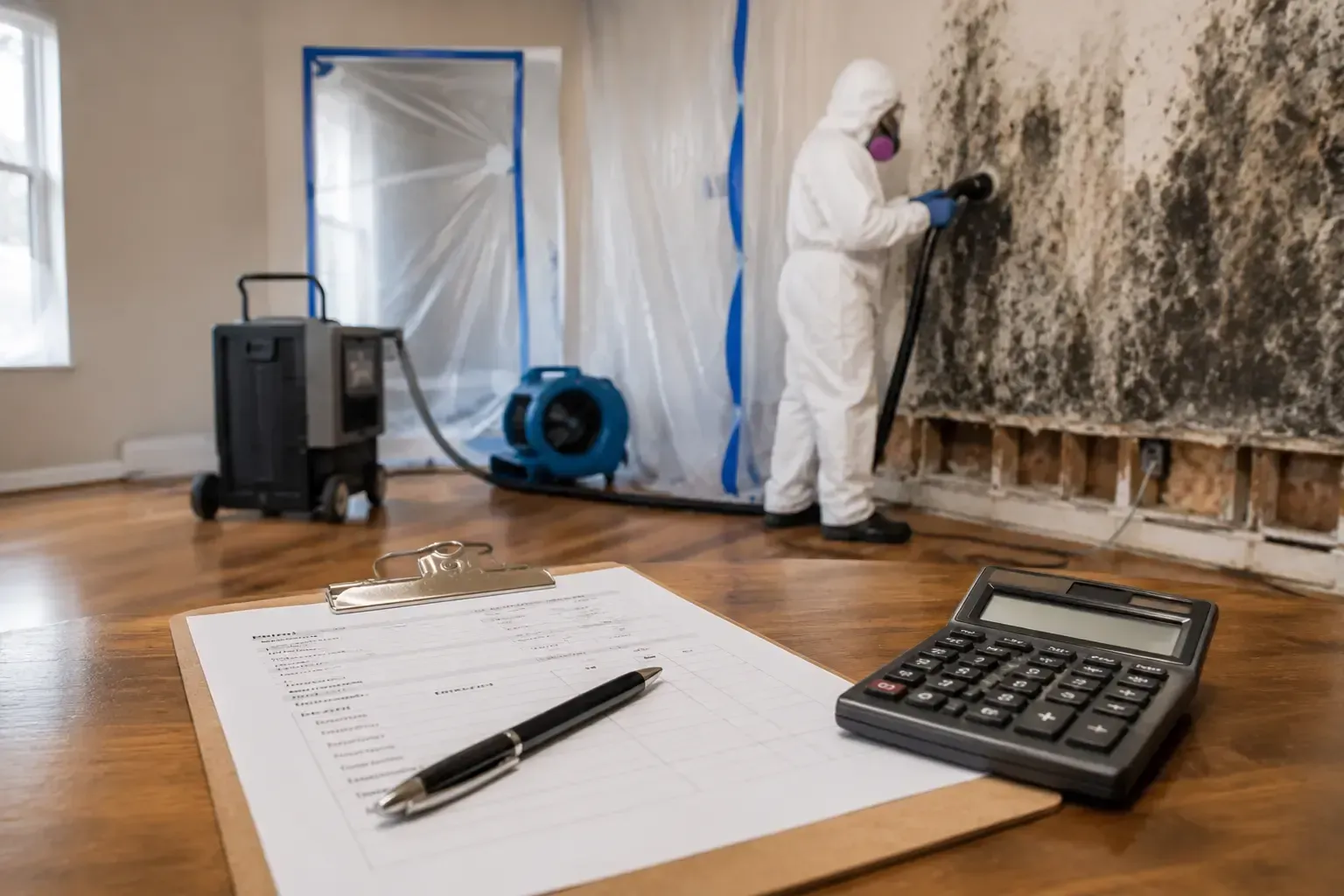
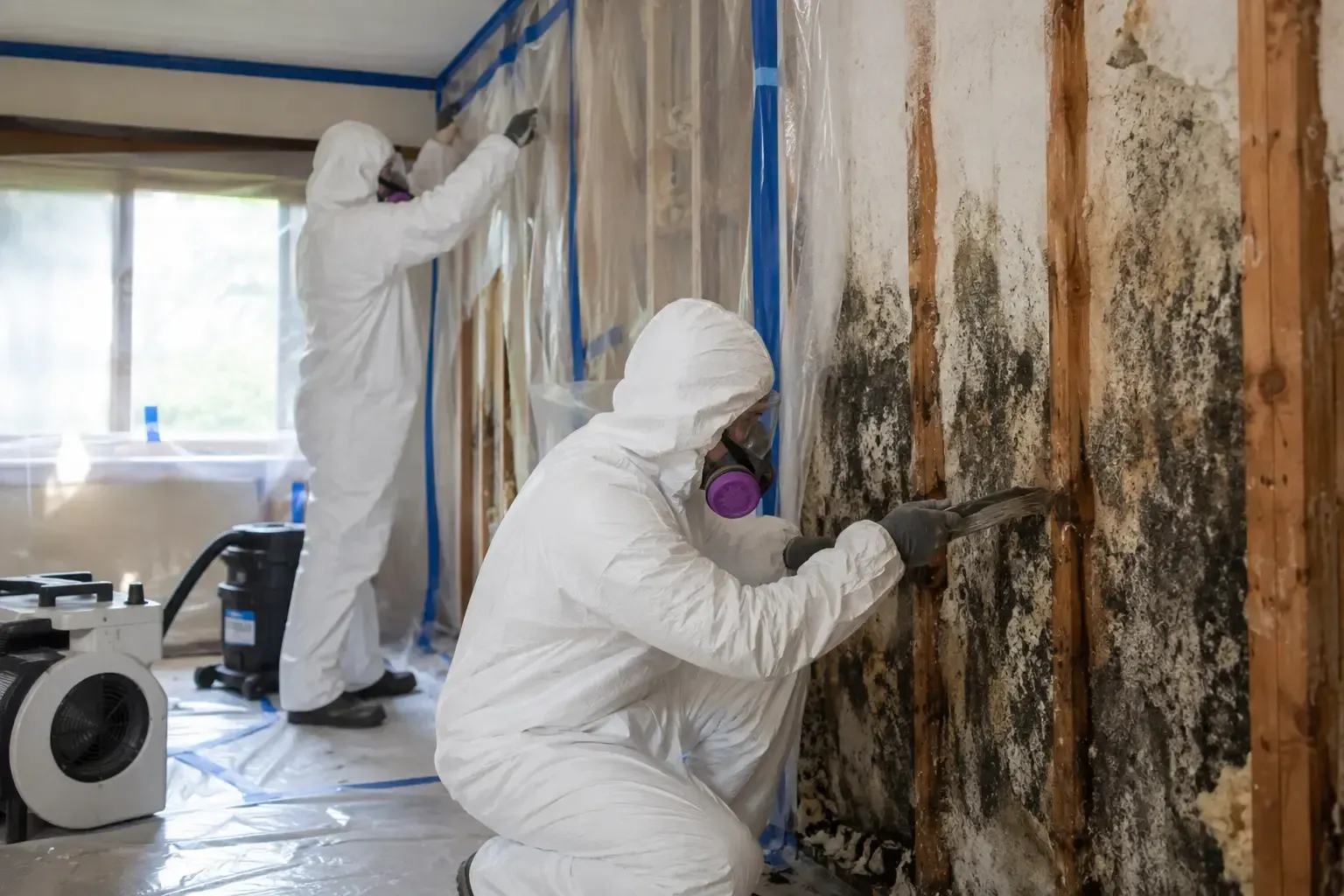
Containment with plastic sheeting and negative air pressure.
HEPA filtration running continuously through the project.
Removal of contaminated porous materials (drywall, insulation, carpet) - chemical treatment alone does not work.
Antimicrobial treatment of substrate framing.
Address moisture source - without this the mold returns within months.
Post-remediation verification air testing to confirm spore counts are at baseline.
Frequently Asked Questions
How much does black mold remediation cost in Kansas City?
Small contained area: $1,500-$3,500. Whole-room contamination: $5,000-$15,000. HVAC contamination or whole-house: $15,000+.
Does insurance cover black mold?
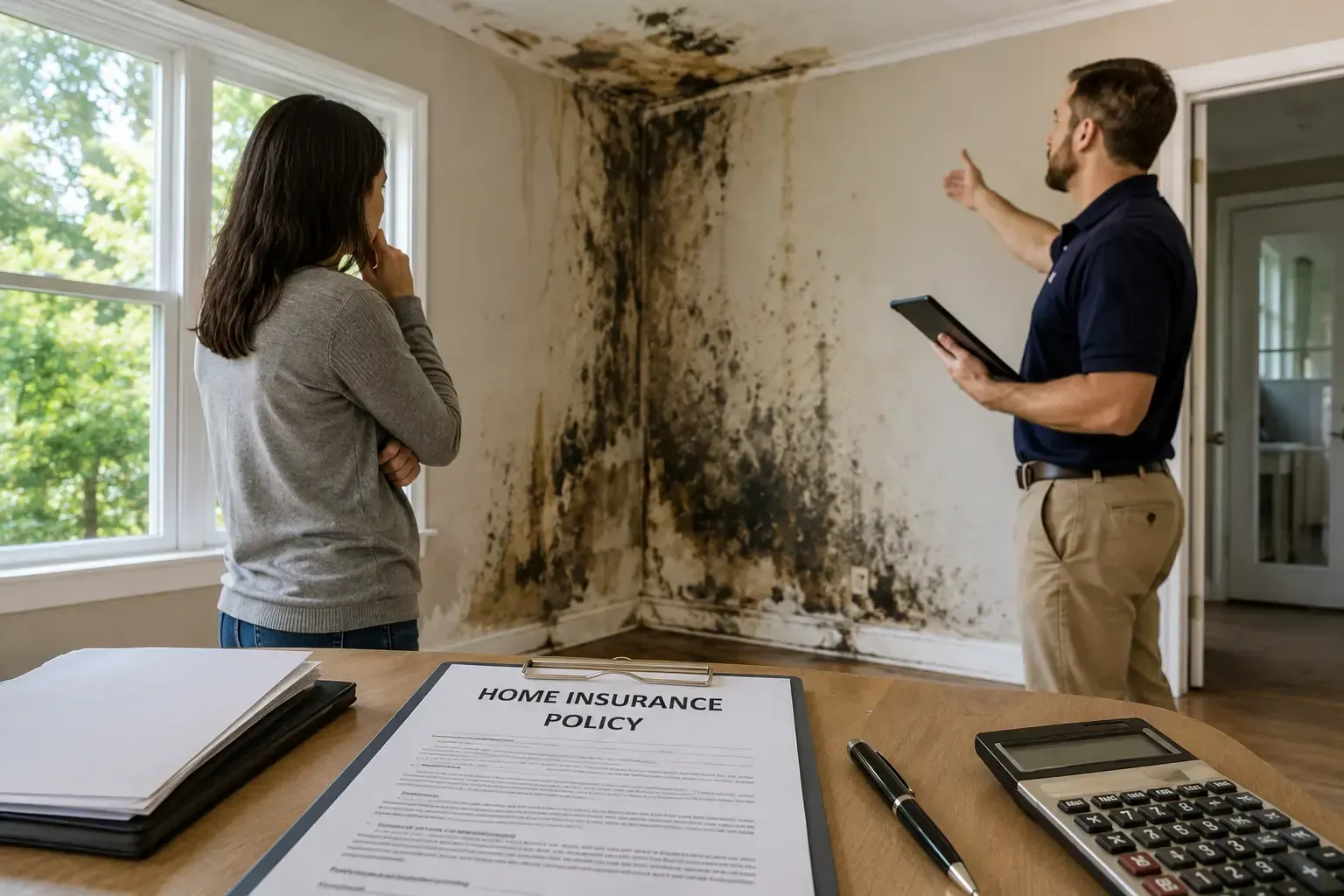
Only if mold resulted from a covered water-damage event (burst pipe, storm). Mold from gradual leaks or humidity is excluded. Most policies cap mold at $5,000-$10,000.
How fast does black mold grow?
Spores germinate within 24-48 hours on wet porous materials. Visible colonies appear within 7-14 days.
Can I stay in my home during black mold remediation?
For small contained areas yes. For whole-room or whole-house remediation, plan to relocate temporarily - even with containment, spore levels spike during removal.
When to Call Mold Warrior
Mold Warrior provides certified mold remediation across Kansas City, Overland Park, Lee's Summit, and the surrounding metro. Our IICRC-trained team uses HEPA containment, professional removal, and post-remediation verification testing - the standard the EPA actually recommends.
Call for a free on-site mold assessment and air-quality test quote. The longer black mold sits, the more you pay - both in remediation cost and health impact.